| This blogpost is to chronicle work done during August 2017 and the ability to manipulate the weather. I put 5 river rocks that were taken with offering to put in this cherry tree that produced alot this summer. This is part of a Taino Caribbean Indio way to make rain. We are having one of the most dry and most wildfires here in the PNW in history. The smoke and air quality is very bad in some areas.  I sang to my Lwa Legba, Metrisili, Cachita Tumbo, Papa Sobo y Bade and Tindjo Alawe while harvesting peas for hours in the evening and my main 2 spirit guides on Sunday. I sang a song my spirits told me for rain. Thank you to my brothers and sister and native tribes doing drumming in western Canada, those who have prayed & assisted. I cannot take credit but I know they have helped us, and thankful to the Lwa & mercy of Bondye, I felt drops of rain when there should be none a few nights ago. There was no forecast for rain, now there is rain coming about 5 days to the day after I did ceremony, and they increased the forecast to rain all weekend for my birthday. My Lwa I am assured! Ayibobo!
Cheeehooo its raining! our water was almost out I am on well and duck pond pump and rain barrels right now on this property. Did my rain dance song 24 hours ago. I am going to sing it again!
look at the change in temperature too And I always get headache before it rains. And its the thunder full moon just put my pot out to catch some!  Vancouver Island 29-32 degree Celsius down to 16! Clear Clear 28°C Precipitation: 0% Humidity: 77% Wind: 6 km/h Thu Sunny 29° Fri Mostly Sunny 27° Sat Scattered Showers 21° Sun Showers 16° Mon Cloudy 17° Tue Partly Cloudy 19° Wed Showers 19°   Recently I have had to walk to work in the mountainous western area of the USA and it rains late winter and spring. I asked my spirits several times to hold off the rain until I could make it to work, and miraculously the weather obliged each time, with a few sprinkles only the one time! As to the relation between the offices of chief and rain-maker in South Africa a well-informed writer observes: “In very old days the chief was the great Rain-maker of the tribe. Some chiefs allowed no one else to compete with them, lest a successful Rain-maker should be chosen as chief. There was also another reason: the Rain-maker was sure to become a rich man if he gained a great reputation, and it would manifestly never do for the chief to allow any one to be too rich. The Rain-maker exerts tremendous control over the people, and so it would be most important to keep this function connected with royalty. Tradition always places the power of making rain as the fundamental glory of ancient chiefs and heroes, and it seems probable that it may have been the origin of chieftainship..... | ||
The foregoing evidence renders it probable that in Africa the king has often been developed out of the public magician, and especially out of the rain-maker. The unbounded fear which the magician inspires and the wealth which he amasses in the exercise of his profession may both be supposed to have contributed to his promotion. But if the career of a magician and especially of a rain-maker offers great rewards to the successful practitioner of the art, it is beset with many pitfalls into which the unskillful or unlucky artist may fall. The position of the public sorcerer is indeed a very precarious one; for where the people firmly believe that he has it in his power to make the rain to fall, the sun to shine, and the fruits of the earth to grow, they naturally impute drought and dearth to his culpable negligence or willful obstinacy, and they punish him accordingly. Hence in Africa the chief who fails to procure rain is often exiled or killed. Thus, in some parts of West Africa, when prayers and offerings presented to the king have failed to procure rain, his subjects bind him with ropes and take him by force to the grave of his forefathers that he may obtain from them the needed rain. The Banjars in West Africa ascribe to their king the power of causing rain or fine weather. So long as the weather is fine they load him with presents of grain and cattle. But if long drought or rain threatens to spoil the crops, they insult and beat him till the weather changes. When the harvest fails or the surf on the coast is too heavy to allow of fishing, the people of Loango accuse their king of a “bad heart” and depose him.
|
Sunday, April 29, 2018
Weather witch: the rain maker


Saturday, April 7, 2018
Oral hygiene, the mouth, divination and working with the dead
Spiritual hygiene such as cleansings was given an introduction in a previous blogpost.
As well another blogpost covered how the dead can affect a living persons physical health.
Looking at the liver of a sacrificed or animal killed to divine a physical illness, often the entrails or gut and liver of the animal was looked at. This often would show negative energy removed from a person or divinatory information. Likewise the gut, liver and intestines of a person are often affected by negative energy.
Bowels have been related metaphorically to lower realms or "hell" where there is the stench of sulfur, feces/excrement and to lower energetic frequency.
The other area is the bones and teeth related to saturnine aspects of the dead, the material and death...a skeleton.
Omens such as dreaming of teeth falling out is said to portend a death in the family.
The mouth and teeth are related to digestion and our ability to nourish ourself for health and life to eat to take in energy. If we do not eat we do not live and will waste away as if something was feeding on our energy. As well as to express and defend ourself "tooth and nail". We may not be literally biting people but if we look at symbolism and how that plays out on energetic realms such as with totems and the use of animal parts in folk magic such as horn and fang in protection and warrior traditions, it also relates to being a human/animal in warfare or fight and flight.
With divination in the ATRS (african religions) many refresh their shells used for divination with coconut water and cleanse the instruments with cigar smoke. The devices are instructed that the mouths of the shells, or tarot cards used speak truthfully and accurately. This is done in some Yoruban faiths because misfortune causes the divination devices to be inaccurate unless they are cleansed. One Espiritismo Cruzado prayer of tobacco, asks that may the spirits that speak through the sacred smoke of this tobacco... and through the spiritual fluids communicate as such with purity.
In Palo, a communal drink of chamba is used for several reasons. One being practical to decrease illness by cleansing the mouth, sickness believed to be caused by bad spirits. The drink contains antimicrobial substances like alcohol/rum steeped with ingredients such as hot peppers, ginger and garlic. Some recipes contain bone powder and sticks from different species and is made or human consumption or for feeding items and spirits only. It is buried in the earth, a tomb to absorb the energies of the universe and the ground. Chamba again has many applications, but it is believed the dead can cause cavities and residue from their energy can rot inside holes in the teeth. Coconut products were also possibly used as daily routine in personal care, such as with oil pulling in the mouth which is spat out after swishing for minutes.
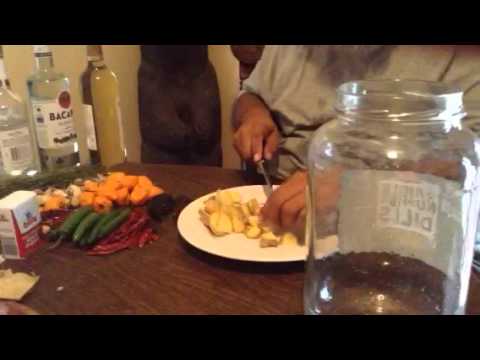
Despite not having modern dentistry many areas of the world with tropical climates did not have as many dental problems as we see in modern cities. Natural products like these were used in traditional medicines and preventative remedies....
Still, it is a good idea to be up on your regular care and appointments.
Chamba drink is swallowed and is also a form of internal cleansing against witchcraft affecting the body, or if injested in our food that someone laced with witchcraft. In days of slavery poisons, insects, dirts etc were often put in rivals and slavemasters food and drink. Popular today is a love spell where women put heir menstral blood in their mens food like spaghetti sauce to try to dominate them and ensure fidelity. So be careful about who you accept food and gifts from! This is why some will not accept or have prohibitions on leaving drinks around especially dark drinks that can mask what people have put in.
My post on Mama Juana describes a Caribbean native medicinal drink made to also cleanse the body of witchcraft as well as detox the gut, liver and gallbladder area, and can help many disease process. Detox of the body is a good idea in general to help elevate your energy, increase spiritual faculties and health.
You can also do this with coffee fixed how you like or dandelion root tea sweetened with honey, as it is bitters and a digestive tract cleanse. It is dark in color and therefore is good for "banishing" or cleansing. Speak and pray over it to intend to cleanse your digestive intestinal organs and body, to remove any negativity, sorcery, witchcraft and stagnation before drinking. To make a ritual of it light a white tea light candle along with your beverage.
Myself I spray rum with my mouth to clean areas and feed and connect with spirits and use my energy, there is a great supply of personal power of Ashe upon the saliva. Often times sweat/scent or unbrushed mouth has a persons energy connected to it so spirits can find you faster with Vodou, or with bad spirits, which is why we change our clothes, linens and do spiritual breakings and cleansings with worn dirty clothing.
As well another blogpost covered how the dead can affect a living persons physical health.
Looking at the liver of a sacrificed or animal killed to divine a physical illness, often the entrails or gut and liver of the animal was looked at. This often would show negative energy removed from a person or divinatory information. Likewise the gut, liver and intestines of a person are often affected by negative energy.
Bowels have been related metaphorically to lower realms or "hell" where there is the stench of sulfur, feces/excrement and to lower energetic frequency.
The other area is the bones and teeth related to saturnine aspects of the dead, the material and death...a skeleton.
Omens such as dreaming of teeth falling out is said to portend a death in the family.
The mouth and teeth are related to digestion and our ability to nourish ourself for health and life to eat to take in energy. If we do not eat we do not live and will waste away as if something was feeding on our energy. As well as to express and defend ourself "tooth and nail". We may not be literally biting people but if we look at symbolism and how that plays out on energetic realms such as with totems and the use of animal parts in folk magic such as horn and fang in protection and warrior traditions, it also relates to being a human/animal in warfare or fight and flight.
With divination in the ATRS (african religions) many refresh their shells used for divination with coconut water and cleanse the instruments with cigar smoke. The devices are instructed that the mouths of the shells, or tarot cards used speak truthfully and accurately. This is done in some Yoruban faiths because misfortune causes the divination devices to be inaccurate unless they are cleansed. One Espiritismo Cruzado prayer of tobacco, asks that may the spirits that speak through the sacred smoke of this tobacco... and through the spiritual fluids communicate as such with purity.
In Palo, a communal drink of chamba is used for several reasons. One being practical to decrease illness by cleansing the mouth, sickness believed to be caused by bad spirits. The drink contains antimicrobial substances like alcohol/rum steeped with ingredients such as hot peppers, ginger and garlic. Some recipes contain bone powder and sticks from different species and is made or human consumption or for feeding items and spirits only. It is buried in the earth, a tomb to absorb the energies of the universe and the ground. Chamba again has many applications, but it is believed the dead can cause cavities and residue from their energy can rot inside holes in the teeth. Coconut products were also possibly used as daily routine in personal care, such as with oil pulling in the mouth which is spat out after swishing for minutes.
Despite not having modern dentistry many areas of the world with tropical climates did not have as many dental problems as we see in modern cities. Natural products like these were used in traditional medicines and preventative remedies....
Still, it is a good idea to be up on your regular care and appointments.
Chamba drink is swallowed and is also a form of internal cleansing against witchcraft affecting the body, or if injested in our food that someone laced with witchcraft. In days of slavery poisons, insects, dirts etc were often put in rivals and slavemasters food and drink. Popular today is a love spell where women put heir menstral blood in their mens food like spaghetti sauce to try to dominate them and ensure fidelity. So be careful about who you accept food and gifts from! This is why some will not accept or have prohibitions on leaving drinks around especially dark drinks that can mask what people have put in.
My post on Mama Juana describes a Caribbean native medicinal drink made to also cleanse the body of witchcraft as well as detox the gut, liver and gallbladder area, and can help many disease process. Detox of the body is a good idea in general to help elevate your energy, increase spiritual faculties and health.
You can also do this with coffee fixed how you like or dandelion root tea sweetened with honey, as it is bitters and a digestive tract cleanse. It is dark in color and therefore is good for "banishing" or cleansing. Speak and pray over it to intend to cleanse your digestive intestinal organs and body, to remove any negativity, sorcery, witchcraft and stagnation before drinking. To make a ritual of it light a white tea light candle along with your beverage.
Myself I spray rum with my mouth to clean areas and feed and connect with spirits and use my energy, there is a great supply of personal power of Ashe upon the saliva. Often times sweat/scent or unbrushed mouth has a persons energy connected to it so spirits can find you faster with Vodou, or with bad spirits, which is why we change our clothes, linens and do spiritual breakings and cleansings with worn dirty clothing.
But also make a point to brush my teeth before misa or when I know I will be speaking during spiritual readings so that I too may speak via spirit and work cleanly and speak accurately to remove obstacles to our work with higher entities.
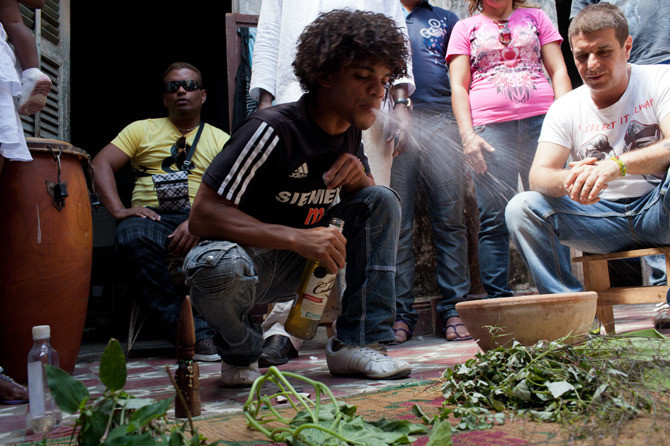
The mouth is a gateway or portal. The holy spirit and gift of tongues are mentioned many times in the bible, and about the mouth of God, and even in genesis how the spoken word leads to creation or manifestation from the spiritual to the physical world. The mouth is an opening and energy center of the body, blood circulation under the tongue supplies ready energy to the breath, along with the lungs during speech to create a vibrational current, and in the use of breath in spiritual works to charge and awaken such as blowing Vodou powders to the 4 winds.

For what is the language of the birds? It is not literally understanding a bird chirping..hahaha The birds carry our prayers to the spirits in our ceremony, the feathers and wings are metaphors of airy spirit flight.
It is to speak and communicate with spirit(s). And there are much deeper secrets than these.

There are certain Lwa who will not touch earth in their horses, nor interact with the community unless strict cleanliness has been observed.
Hope that these words have been illuminating for you,
until next time,
Sancista Siete Enruzhiladas
The mouth is a gateway or portal. The holy spirit and gift of tongues are mentioned many times in the bible, and about the mouth of God, and even in genesis how the spoken word leads to creation or manifestation from the spiritual to the physical world. The mouth is an opening and energy center of the body, blood circulation under the tongue supplies ready energy to the breath, along with the lungs during speech to create a vibrational current, and in the use of breath in spiritual works to charge and awaken such as blowing Vodou powders to the 4 winds.
For what is the language of the birds? It is not literally understanding a bird chirping..hahaha The birds carry our prayers to the spirits in our ceremony, the feathers and wings are metaphors of airy spirit flight.
It is to speak and communicate with spirit(s). And there are much deeper secrets than these.
Mar 16:17 And these signs shall follow them that believe; In my name shall they cast out devils; they shall speak with new tongues;
Act 2:3 And there appeared unto them cloven tongues like as of fire, and it sat upon each of them.
Act 2:4 And they were all filled with the Holy Ghost, and began to speak with other tongues, as the Spirit gave them utterance.
John 20:22 And when he had said this, he breathed on them,and saith unto them, Receive ye the Holy Ghost:
I will also wash my hands if a bath for some reason was not performed with florida water.There are certain Lwa who will not touch earth in their horses, nor interact with the community unless strict cleanliness has been observed.
Hope that these words have been illuminating for you,
until next time,
Sancista Siete Enruzhiladas
Thursday, January 25, 2018
The Book of Mediums by Allan Kardec
The Spirits Book was the first published in the works compiled by Allan Kardec, dictated by the spirits of light in attending seances, and by observing and interviewing mediums. Table turning and these reunion sessions were en vogue during the Victorian era. The second in the series is the Mediums Book.

The philosophy of spiritism was thus codified, which set it apart from other spiritualism at the time during the mid 1800's- 1900. Classic or scientific spiritism follows this doctrine, in spanish espiritismo.
Thus defined:
"Spiritism has no priests and does not use or use in its meetings and practices altars, images, candles, processions, sacraments, indulgences, alcoholic or hallucinogenic beverages, incense, smoke, talismans, amulets, horoscopes, cartomancy, pyramids, crystals or any other objects, rituals or forms of worship.
Spiritism does not impose its principles. However other religions assist in Espiritismo aka Spiritism.
VS
Cruzado:
Espiritismo is a separate spiritual and religious practice that has incorporated into most houses of Santería. The type of Espiritismo practiced in Santería Lucumí is called Espiritismo Cruzado (Blended Spiritism) because it has been blended or hybridized with African elements from the Congo people." It is a nod to Kardec but contains syncretic elements in its spiritualism."
The Book of Mediums is essential to understanding Espiritismo Cruzado in our lineage and spiritual house, although it is beneficial to read other Kardec books. And of course our misa, folk seances are conducted with the Kardec Book of selected prayers.
The language is somewhat antiquated and dry. A hard copy of the book can be bought, but a free pdf is provided here. The Mediums Book <<<<<click here
The difficulty also for some I have encountered is learning difficulties and problems with reading a digital pdf on a screen.

Therefore I have dictated a summary and parts of the chapters, and adding some information to the Mediums Book in a series on youtube, for learning in my temple, and to provide it to the public.
Book of Mediums youtube series <<<<<click here
"Hippolyte Léon Denizard Rivail, under the codename Allan Kardec; proposed the study of "the nature, origin, and destiny of spirits, and their relation with the corporeal world". It encompasses "A discussion of the means of communicating with the invisible world, the development of mediumship and the difficulties encountered in the practice of spiritualism" and more....
Luz y Progresso,
Sancista 7 Crossroads

Tuesday, January 2, 2018
Traditional Herb Series: Fig or Jaguey
Hi everyone, in studying herbs and people asking about them I decided to write a bit more about the plants that we use in more traditional preparations. As always in studying plants check with your mentor or godparent about what you are learning. When you take from a plant payment must be given, and talk with it first so that the plant is effective and that the spirit is not offended.This could be water in dry months, or 5 or 7 coins, or a crystal, incense, something of value, along with but not just a prayer for its healing, elevation for helping you and to bless the plant. Everything is exchange. There are also principles of timing and where the plant grows that will affect the energy of the plant, and therefore your usage.
All plants belong to Osayin and Gurunfinda or Gran Bwa as the owner, depending on tradition, and if domesticated or cultivated and not wild may also belong to spirits like Oko or Azaka.
However Jaguey is associated to the Mpungo Siete Rayos and Zarabanda in Palo, besides the spirits who own every plant.
The fig plant is known as a plant of betrayal or the Judas plant in Cuba, and is one of the many palos sticks used in Palo Mayombe, Monte and its various branches. It is called as such because it approaches other plants and strangles them, "strangler fig" Ficus Aurea/Hembra as the one that grows in tropical areas: Ficus crassinervia (trigonata) drags them down drowning them. It is my supposition that as Adam and Eve hid their nakedness with the leaf, it may have gained also a reputation in the diaspora.Therefore this plant got known for its uses against enemies when offended.
The fresh leaves are also used in a variety of ways in folk craft such as spiritual baths, or dried into spiritual items, around or on candles and into lamps.
The other nicknames for this plant is Vence Batalla: wins battles and Vence Guerra wins wars, as well as Yo puedo mas que tu: I can more than you, or I know better than you. You may see several listings for the same plant as people who are prescribed might not know all the names for the same thing.
 Photo from Vancouver island

It is a strong macho dominating and controlling herb, used to reverse black magic back to the sender, to overcome your enemies or those who abuse you, and for protection in the ATR's.
Some also use the leaf for divination, it is instructed to tell the truth, to see if it curls as a no or stays fresh as yes when something is written upon a picked leaf. This is gypsy magic or sycomancy. A live fig plant in the bedroom is said to promote peaceful sleep, in the house as good luck, outside the house to return home safely, and in the kitchen to ensure no one ever goes hungry. In Greek mythology it is a fruit of love or attraction, male potency and fertility. It is a plant which Buddha may have sat under to gain enlightenment. http://eluneblue.com/fig-magical-properties/


There is some difference between variety of fig plant, but they are all called jaguey. The male or macho one which needs to be used has large leaves than the female.
 As we may live in areas other than the varieties that grow in tropical areas, a study and experimentation must be made of local or nursery plants in the native area you live. In any case fig is jaguey. There are medicinal effects of plants, but my blog focus on these plants will be more on the spiritual aspect. That being said the fig fruit is known to reduce blood pressure.
If you have any herb study requests, let me know, I'm going to focus on ones that grow in the Pacific north west for now that are readily available to me.
If you like my content please feel free to share my original posts and video links

All plants belong to Osayin and Gurunfinda or Gran Bwa as the owner, depending on tradition, and if domesticated or cultivated and not wild may also belong to spirits like Oko or Azaka.
However Jaguey is associated to the Mpungo Siete Rayos and Zarabanda in Palo, besides the spirits who own every plant.
The fig plant is known as a plant of betrayal or the Judas plant in Cuba, and is one of the many palos sticks used in Palo Mayombe, Monte and its various branches. It is called as such because it approaches other plants and strangles them, "strangler fig" Ficus Aurea/Hembra as the one that grows in tropical areas: Ficus crassinervia (trigonata) drags them down drowning them. It is my supposition that as Adam and Eve hid their nakedness with the leaf, it may have gained also a reputation in the diaspora.Therefore this plant got known for its uses against enemies when offended.
The fresh leaves are also used in a variety of ways in folk craft such as spiritual baths, or dried into spiritual items, around or on candles and into lamps.
The other nicknames for this plant is Vence Batalla: wins battles and Vence Guerra wins wars, as well as Yo puedo mas que tu: I can more than you, or I know better than you. You may see several listings for the same plant as people who are prescribed might not know all the names for the same thing.

It is a strong macho dominating and controlling herb, used to reverse black magic back to the sender, to overcome your enemies or those who abuse you, and for protection in the ATR's.
Some also use the leaf for divination, it is instructed to tell the truth, to see if it curls as a no or stays fresh as yes when something is written upon a picked leaf. This is gypsy magic or sycomancy. A live fig plant in the bedroom is said to promote peaceful sleep, in the house as good luck, outside the house to return home safely, and in the kitchen to ensure no one ever goes hungry. In Greek mythology it is a fruit of love or attraction, male potency and fertility. It is a plant which Buddha may have sat under to gain enlightenment. http://eluneblue.com/fig-magical-properties/


There is some difference between variety of fig plant, but they are all called jaguey. The male or macho one which needs to be used has large leaves than the female.

If you have any herb study requests, let me know, I'm going to focus on ones that grow in the Pacific north west for now that are readily available to me.
If you like my content please feel free to share my original posts and video links

Saturday, December 9, 2017
New Years 2018 luck: flowers bath, florecimiento & more!
Hi everyone, I have been working on alot of things and with clients, so I haven't been able to blog or vlog as much as I would like. On my facebook page I try to stream Sundays at 6pm PST, 7pm MST.
Last year I described how to make traditional Christmas and New Years baths that you can do again this year if you like. I have seen some synthetic New Years kits go for $40 and up plus shipping, but I would like to tell you how to do your own at home. Many people do buy them prepared from a spiritual worker or performed by them, instead of a commercial source because they have more power.
 taken from autenticohechizosdebrujeria.blogspot.com
I thought to release how to do a different lucky bath for the new years. You should do a cleansing before you start these attraction baths.
It is a common afro-hispanic bath to use sweet herbs like mint, after a series of bitter herbs if you also want to check out that blog entry to do that, or use the sweet herb list to make a floorwash after you have swept the floor back to front. Important to note again is we do not usually add fruit or flower to leaves together.
Some people buy a new broom for the next year after they have swept out the bad, and smudged out your place with some palo santo, copal, or sage with other herbs. The house is cleansed, and the car, because that is how the next year is going to be.
Flower baths are a common sweet bath to bring the good in life, and for the new year. It is because flower or flora sounds like flourish, to grow and bloom the new opportunities. This bath is known as florecimiento. It is common to use 3 different colors of roses or flower such as yellow for money, red or pink for love, and white for general blessings. We almost always use fresh items because they have more energy, but you could use dried flowers or a tea bag of chammomile,. This is a customary bath in many afro-hispanic countries and in south America. One mixed bouquet would be more economical, and the extra flowers can be given to your spirits. One color flower based on intent is also fine. To this can be added a sweet perfume like florida water or pompeya or water such as rose water if you cannot afford roses, orange water, or milks. Rice milk or water runoff is great, as rice is associated with purity, prosperity and the New Year. Honey, orange juice, holy water, champagne, cinnamon are other ideas to add. You can also added mushed up sweet fruits. Some make a version with boiled apples or a bit of applesauce. You can add water from your rose of Jericho bloom that can also be added to floorwashes.
Remember we always add odd number of things to a bath. I would do this for 3,5 or 7 days, sat in or sponged up the body to the head after a normal shower. (Always check with your godparents as some items are taboo for those who have crowned spirits). You will shred and mush the items with your hands, and put your intention into the mix, whether you want love or money or what you wish for the New Year. You will pray over it by laying on your hands, singing, or reciting psalms it is up to you. Cover it with an appropriate color cloth and keep it beside your spirits.
To recap a basic idea would be:
flowers, honey, oils/waters/perfumes, cinnamon and/or sweet spices.
I recommend you also use a sweet incense in the house such as coconut, vanilla, rose, cinnamon etc. Use a bayberry, bakery smelling, cinnamon or rose: sweet candle, or a white candle anointed with a sweet fruity or floral essential oil like orange etc, every day that you do your baths. You can also keep a prosperity, luck or love lamp.
Prepare a sweet drawing or refreshing floorwash, from the front of your house to the back, reverse to what you would do in cleansing. I would either use basil, parlsey, mint, lemongrass/Van Van/Chinese wash or just abre camino herb (bitter but opens the roads new opportunites in life) with a splash of holy water. It is a good idea to rearrange furniture and decor to get the energy moving, and throw out old and broken items and clothes. Some people wear new clothes and underwear on New Years. In Puerto Rico they wear new white undies, in other countries yellow, or based on what they desire. In Mexico red underwear for luck or others for strength power and protection. They also bathe in the ocean before the clock strikes midnight dunking themself 7 times. Others drop backwards into the wave at midnight to drive away evil spirits.

Many cultures all over the world have New Years rituals and customs. Many eat special foods such as black eyed peas for health and wealth or rice pudding. A gold ring in champagne for prosperity and love, or the festive coquito drank in Puerto Rico. 12 grapes for good luck are eaten under the table in the last 12 seconds to midnight for a good 12 months came to the new world from Spain. In Latin America a suitcase for business or for travel is placed by the front door with coins in it after running around the outside of the block with it. Clean out and fix your wallet or purse with dry beans or money drawing oil for prosperity. Some also fix their shoes, or put a coin in their shoe to walk into the new.
Some throw a bucket of water out of the window of the house to cleanse it at midnight or clang and bang pots and pans while opening the door and walking outside to rid the place of bad energy and spirits.
Prosperity Lamp
My Tata also has a spell using flat leaf parsley in a vase kept by the front door on a plate around which is arranged cut oranges and honey drizzled ontop the whole thing..
What will you be doing?
 Feliz Ano Nuevo! Wishing you health, wealth and blessings,
Sancista 7 Crossroads
Last year I described how to make traditional Christmas and New Years baths that you can do again this year if you like. I have seen some synthetic New Years kits go for $40 and up plus shipping, but I would like to tell you how to do your own at home. Many people do buy them prepared from a spiritual worker or performed by them, instead of a commercial source because they have more power.
I thought to release how to do a different lucky bath for the new years. You should do a cleansing before you start these attraction baths.
It is a common afro-hispanic bath to use sweet herbs like mint, after a series of bitter herbs if you also want to check out that blog entry to do that, or use the sweet herb list to make a floorwash after you have swept the floor back to front. Important to note again is we do not usually add fruit or flower to leaves together.
Some people buy a new broom for the next year after they have swept out the bad, and smudged out your place with some palo santo, copal, or sage with other herbs. The house is cleansed, and the car, because that is how the next year is going to be.
Flower baths are a common sweet bath to bring the good in life, and for the new year. It is because flower or flora sounds like flourish, to grow and bloom the new opportunities. This bath is known as florecimiento. It is common to use 3 different colors of roses or flower such as yellow for money, red or pink for love, and white for general blessings. We almost always use fresh items because they have more energy, but you could use dried flowers or a tea bag of chammomile,. This is a customary bath in many afro-hispanic countries and in south America. One mixed bouquet would be more economical, and the extra flowers can be given to your spirits. One color flower based on intent is also fine. To this can be added a sweet perfume like florida water or pompeya or water such as rose water if you cannot afford roses, orange water, or milks. Rice milk or water runoff is great, as rice is associated with purity, prosperity and the New Year. Honey, orange juice, holy water, champagne, cinnamon are other ideas to add. You can also added mushed up sweet fruits. Some make a version with boiled apples or a bit of applesauce. You can add water from your rose of Jericho bloom that can also be added to floorwashes.
Remember we always add odd number of things to a bath. I would do this for 3,5 or 7 days, sat in or sponged up the body to the head after a normal shower. (Always check with your godparents as some items are taboo for those who have crowned spirits). You will shred and mush the items with your hands, and put your intention into the mix, whether you want love or money or what you wish for the New Year. You will pray over it by laying on your hands, singing, or reciting psalms it is up to you. Cover it with an appropriate color cloth and keep it beside your spirits.
To recap a basic idea would be:
flowers, honey, oils/waters/perfumes, cinnamon and/or sweet spices.
I recommend you also use a sweet incense in the house such as coconut, vanilla, rose, cinnamon etc. Use a bayberry, bakery smelling, cinnamon or rose: sweet candle, or a white candle anointed with a sweet fruity or floral essential oil like orange etc, every day that you do your baths. You can also keep a prosperity, luck or love lamp.
Prepare a sweet drawing or refreshing floorwash, from the front of your house to the back, reverse to what you would do in cleansing. I would either use basil, parlsey, mint, lemongrass/Van Van/Chinese wash or just abre camino herb (bitter but opens the roads new opportunites in life) with a splash of holy water. It is a good idea to rearrange furniture and decor to get the energy moving, and throw out old and broken items and clothes. Some people wear new clothes and underwear on New Years. In Puerto Rico they wear new white undies, in other countries yellow, or based on what they desire. In Mexico red underwear for luck or others for strength power and protection. They also bathe in the ocean before the clock strikes midnight dunking themself 7 times. Others drop backwards into the wave at midnight to drive away evil spirits.
Many cultures all over the world have New Years rituals and customs. Many eat special foods such as black eyed peas for health and wealth or rice pudding. A gold ring in champagne for prosperity and love, or the festive coquito drank in Puerto Rico. 12 grapes for good luck are eaten under the table in the last 12 seconds to midnight for a good 12 months came to the new world from Spain. In Latin America a suitcase for business or for travel is placed by the front door with coins in it after running around the outside of the block with it. Clean out and fix your wallet or purse with dry beans or money drawing oil for prosperity. Some also fix their shoes, or put a coin in their shoe to walk into the new.
Some throw a bucket of water out of the window of the house to cleanse it at midnight or clang and bang pots and pans while opening the door and walking outside to rid the place of bad energy and spirits.
Prosperity Lamp
Sancista 7 Crossroads
Saturday, November 11, 2017
Getting started in Vodou & altars: non-initiates & beginner advice
Get a reading to discover some of your Lwa
The very first and respectful thing to do, if you are interested in the religion of Vodou is to get a reading from an initiated priest to look into your spirits, the Lwa of the religion.
It should be a reading from a priest in the branch that you are interested in, or possibly want to be initiated in yourself eventually. This is because different houses and branches have different spirits, and these will step forwards when you are read. They may also share some in common. Depending on your bloodline some of these spirits may have been there since birth. In family Vodou they pass down the same handful of Lwa. You must look at obtaining this guidance as joining another family or through a different group. Some say at least our head spirit was there since birth. I do not personally know if this is true. If we do not have these spirits through bloodline, they can call us, but again we are joining another family, being adopted in. This is why if you go to different priests in different families or branches your reading will not be exactly the same. There is no prohibition to any race or sexual orientation from entering Vodou.

If you get a reading from a Haitian Mambo, and then from a Sancista or Papa Boko, the way in which the spirits come across or step forwards for you can differ due to lineage. If you stop your guidance or relationship under the priest, then your spiritual connections may weaken, unless you become a full priest yourself. Because the connection may be broken by family. This is not DIY do it yourself, mix and match practices.
It is widely held that your met tet, main Lwa or Orisha cannot be known with certainty until you initiate. In 21 divisions, one Papa Boko states there is a reading qi/ki Lwa or star reading. But we do not determine head spirit in Sanse or Haitian Vodou, asson lineage before the ritual date. We may suspect who this is, but it can also change.
The Vodou are not a personality type. Just because you have La Sirene in one tradition does not mean you have Yemaya in another. They are not just archetypes or forces, they are beings. They are not like pat descritpions of greek gods like the god of war or goddess of love. Often times they are a whole group type of family of spirits. One spirit can have different paths or ways they are served that you may have one and not another type of Legba. But in our tradition they would be under the chief Papa Legba.
The Lwa belong to the religion and cannot be separated from their people and religion by magical approach alone. The African spirits do not belong in newage, Wicca or ceremonial magic. The same argument can be made with other indigenous traditions, and fake native American "shamans". Vodou is a living surviving tradition which does not need one person to make changes. And should be respected as such for the sacrifices made. It does not need reconstruction. Its spirits have not gone cold, or as inactive. They are very able to enact change on earth, and as elevated as some are, are not lofty and removed.
Vodou is a religion and not a system of folk magic and curses. Many people do not know what it even is but I am sure only think that they do. Vodou does not have a pantheon you can pick and choose from at will. You either have a Lwa or you don't, especially in the beginning. When you work with other spirits you do not have, it can create problems by making your other connections weaker and problems in your life. You may have problems with bad spirits due to imposters and evil dead masquerading as these spirits. Other spirits who are good can also use the image of Lwa such as guides and ancestors.
Once you have discovered some of your Lwa, you can get direction with what they may require, and have ongoing strengthening of relationship. Initiating is not the beginning or ending of practice, but guidance is absolutely key. You cannot learn from books or the internet. There is alot of bad information out there written by outsiders. the spirits themself have indicated how they want the tradition, and it is not a solitary personal path via psychism, it is a community religion. Any information from alternative sources should be checked with a reputable priest. A relationship with a priest will help prevent alot of problems and also be a resource to help with ones, instead of problems or desperation being your first introduction. You have already shown respect, and respect to the religion and spirits. Vodou is an oral tradition, that practitioners have dedicated their life to.
It needs to be understood that this is a lifestyle, that you need to understand certain cosmological concepts, and become acculturated to the people and culture you wish to approach.It cannot be what you want it to be. This is where entitlement and appropriation come in, a form of bigotry and racism. So be polite and attempt to learn the way things are. Ask about information from several priests to get a better understanding.
Personally I think that Papa Legba can be approached respectfully by all. However do not confuse that with practicing the religion. It is very common to have a visit from Papa Legba or the Baron in the beginning in dreams and such as they are introductory spirits to communication with other Lwa and the dead.

Simple offerings can be given to Baron Samedi at the graveyard gates to introduce yourself, state your full name and that you want to start a relationship. Next visit state your full name and ask for protection if you enter the gates. The ghede can be tricky to work with as they are the radical dead albeit accessible, they are not your ancestors. Cleansings can also be done on this point. His number is 9.

We use different mixtures of natural substances and powders to actuallly draw veve than just cornmeal in the religion.
Ancestral Practice
You must start with you ancestors before you try to work with the higher spirits in the African Religions. You may set up an ancestral altar, but even this may have issues, bringing forth issues with the dead and ancestral issues, which are of benefit to get guidance on. The altar is a microcosm of your life, and a portal. Your ancestors can be displeased, and as a presence interfere and cause blocks in your life. Alot of people when they have problems in their life do not identify it with their spiritual practises. Whatever you do or do not do on your altars will have consequences or play out in your life.
Non-initiates
As a non initiate you should not offer any readings, services or teachings regarding Vodou, Lwa or the Orisha. This is disrespectful, counterfeit and is the job of the priests to provide. It is scamming and going to create problems in your, your family, and clients lives. These spirits are not found in hoodoo. Some do know better and do not care, others get taken advantage of in their ignorance. You should not make objects such as dolls etc. If you do make it clear it is an art piece only without spiritual value. They can be used or prepared by a priest if you want that to happen but consult first as the spirit may not like the figure. The priest is the bridge to the community in a community religion, not solitary. In all indigenous ways, there was a system of apprenticeship. The first step is humility and respect.
You should learn from history and ethnoography instead of buying spell books. You should learn about worldview and concepts behind why things are done. Do not copy other peoples altars and work. It can be an incorrect interpretation that you are assuming, or something personal to someone else that does not apply to you. You should start learning about spiritual hygiene, and keeping up on your spiritual baths and house cleaning spiritually. To know it is one thing, to practice and live this way is another. Vodou is a way of life. Spirit affects and is revealed in all aspects of life.
Try to go to community events near you as much as possible.
It is true that many on the islands are not initiated. But they come from family lineages and many associate with temples for larger issues or are called to priesthood.
A person of a different country and culture lacks that connection otherwise.
Be helpful, respectful and contribute, this way you can observe, and put in service. The spirits will familiarize with you. If this is not possible then continue to work with your priest in terms of items that can be made for you and advise. By purchasing these small to large things, you can have experiences to see if its the house or religion for you.
It is a reciprocal relationship, and you will learn more than buying mostly useless books.
However there is one practical beginning book I can recommend in Haitian Vodou by Mambo Paula Wedo called: Ayibobo
You can learn how to do a basic salute and libations to the Rada Lwa.
Another I can recommend is Mama Lola, many priest recommend this experiential book.
No book will tell you how to practically practice, or has silly ideas or hoodoo and folk magic if it does. It will not supplement your connection to the spirits. You should read suggested books, and always check with your mentor or priests about the information. Most facebook groups are terrible, try to join one and take the advices only from priests not personal opinions.

There is certain way to use veve and they denote lineage, like a calling card or pass. As such you should not use a random one off a book or the internet, unless given by a priest to you. A priest can pass on certain advices, requests and working you can do that are prescribed by the spirits. Readings, also called "lessons" can confirm or deny your own dreams and spiritualism
The Lwa come in "possession" and the spirit administers to the community, its not just spells at home, this is the religion.
The Lwa expect certain things, songs, gestures etc. And the priests are trained to manage the situation. The priests know exorcism. This is real Vodou....not pins in a doll by a self ordained person and such "sorcery", candles or honey jars.
This truth may make some unhappy due to inconvenience, but there are no shortcuts or backdoors.
Work is done with and under the spirits. People will lie to you or do not know what they are doing are likely to rip you off or lead you astray and waste time, the blind leading the blind. Once you get the same answer from several priests stop asking, do not continue to ask around until you get the answer you want or like.
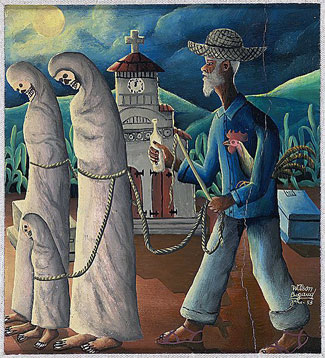
Zonbi
A good priest will have good character. Noone is perfect but they should have a sense of nobility in being trustworthy and be able to control themself and not have knee jerk emotional outbursts,Vodou altar
You should not set up a table without guidance for the reason stated above. To work with the Lwa that you actually have, under an initiated priest. Be open to the spirits you are guided with and not just because you want this or that Lwa. Just because Erzulie is known for love, does not mean that many other Lwa cannot also perform this work, or want to perform this work for you. Once you have an idea of some, with guidance you can set up a prayer table. This is not the same as the priests altar who have received the spirits in ritual, or have been passed down in an unbroken family lineage.
Certain spirits go specific places, some do not like each other, certain things must always be present.
Buying a statue is empty plaster, there is no spirit there. A priest does not need a veve or statue to have contact.
People need to start thinking spiritually and not materially.
When you become an initiate it is like an attunement internally, a foundation: pwen or a spirit point. Which joins the body and head to the spirit.

Of course dolls and statues or pictures can be prepared as pwen. No pwen: no license or attunement with the spirit.
Spirits cannot be bought. Bought Pwen "Achete" are usually but not always contracts facilitated by the priest. They are the dead, earthbound and intranquil, djabs/demons/devils or Petro spirits usually for hire. They are not usually hereditary.
They must be paid, fed and worked with a certain way or your life can become a disaster.
The rada Lwa need to be fed, and given exchange, but again you either have them, they are interested or not.
Others say no altars in a house that is not really yours or is not a family house. Some altars are set up not to be moved and they are there for life. This is because in a traditional African shrine, the land and land spirits are familial, ancestral. Where you are born and buried are linked to family lineage in the root branches connected to your family lines of spirits.
With a prayer table you've created a sacred space designed to focus your faith and attention on your practice. It is intimate, singular and particular to you and it represents your understanding of your relationship between yourself, and your Lwa trhough the lineage you have approached. It is invested with a tremendous amount of your personal spiritual power, energy or ashe. Offerings and prayers can be given, but they are only vested in you, and not do work besides protection and perhaps occasional small petitions. Big work requires more engagement. and not a simple offering. Do not promise them anything you are not able to fulfill. They can be bargained with possibly.
An altar, on the other hand, has been specially prepared and inhabited by the Loases it was made for. It is also indicative of your relationships with your spirits but is reciprocal. The Vodous are actually in the altar and do more than just receive offerings, honor or veneration. It is working with them instead of only serve. Many confuse the word honor or serve with working or petition. The priest only has or can install this altar to a spirit in person.

Tuesday, October 24, 2017
African & folk magic perspective of the Broom & Trees
The well known European aspects of the witch has the broom as an instrument of moving energy, performing marriage and the couple hopping over as a sign of fertility as an implement that contains both sexual polarities and some made of corn fiber. We should note flying ointments being placed on the handle and used internally for "shamanic" journeys, and the pole of the broom as an axis point or world tree.
Jumping the broom was also incorporated in African American folklore which has African roots of stick bundles and can be found in many cultures. It represented the home, change, and new beginnings. The broom represented being scattered and the handle represent God's hand that brings them together.

The broom could be made of several trees and plants such as birch for rebirth or cinnamon for love, good luck and prosperity, like a wand, different sacred woods could be used for various intentions as an extension and conduit of the practitioner.

In neopagan aspects the broom could be used to open and close the threshold and portal of the magic circle depending on the direction and by raising or chasing away energy.
These aspects certainly did collide with other indigenous ideas in the new world. Sweeping and repetitive tasks do lend to a meditative state where the mind wanders or daydreams into a psychic or receptive state to receive messages. When cleaning the house spiritually some tie a white or red cloth around the waist with cascarilla and wear a head wrap as not to be carried away from the spiritual energies being kicked up using song and prayer. The energy or ashe deposited during ceremony in ritual area is also deposited around and blessings are picked up when the spirits see you tending to the area in service.
Floor sweeps of powders and dried herbs are used along with this action to increase intent and cleanse the house of negativity or maintain sacred space in preparation for ritual. Herbs like eucalyptus remove unwanted energy and people from visiting swept from the back door or farthest point out the front door. Some sweep from east to west as the sun sets to chase energy away. A sweep to draw things in for prosperity is done the front door to the back of the house after mundane cleaning so that all the luck isn't swept out. Although there is variations depending on purpose and if one has a backdoor. Special care is taken to the front step and where tricks and powders might be laid against the house occupants.
A broom can be placed upside down behind the front door on the inside of the house to discourage visitors and unwanted people to the house. Some say this encourages poverty and uncleanliness. A broom was hung over the door for protection to sweep away bad energy upon entering, and still to this day by neopagans.
There are many superstitions or folklore about the usage of brooms such as not to sweep against someones feet, under someone or place on a bed, or carry someone else's broom into your home. When you move you need to leave your old broom behind or throw it out because it carries the negative energies such as poverty from the past you do not want to bring to your new residence. If you move to a new place and see a old broom dispose of it right away. You must upright a fallen broom and watch the way it falls. Superstition from different cultures about brooms can contradict each other, such as not burning a broom.
A broom gathers energy such as deposited at the crossroads to take bits of trash or dirt, to control an area, or gather spirits at the graveyard. Typically then the handle or staff would be tied with a red cloth as it indicated it is now empowered by the dead or "hot". You may see this in Rara band processions in Haiti or against certain altars. The items gathered are then used or the spirit employed. These marching and dancing military-like musical bands are known for activism, popular protest, celebration, warfare as seen with congo aspects. Kalfou is associated with the broom, whip and whistle. As Legba opens the way for Rada and are in divisions of Lwa families, so does the Baron open the way for Ghede, or Kalfou to the Petro nations of Loases, as well as djabs or evil spirits.


The broom can be used to sweep away the bad much like energy healing movements and the use of herb bundles or brooms on the energy body. After a bunch of herbs is used to say, cleanse the house, the stalks are broken to break the bad energy, sometimes as an asperger to sprinkle solutions. Sometimes also florida water is poured over them on cement and lit on fire. The broom can be sprayed with different spiritual waters before use.
The broom is linked to the dead and spirits as much as the cauldron.
Our palo or baston de muerto is used for calling the dead from the earth by tapping the ground 9 times. This egun stick can be tied with 9 different color cloths for the clothes of the dead ancestors such as egungun dancing masquerade outfits. Many in Sanse also keep a ritual broom to clear the space before misa tied with 9 colored ribbons to indicate the dead. This also indicates the winds of the dead or air. Much like some of the fly whisks of some of the Orisha such as Oya, or whips to keep away unhealthy influences or gather energies. This is also much like the royal fans I wrote about that remove "bad airs" or sheild and protect against spirits. Such as the use of birds or feathers to also sweep away bad energy.

Legba has the cane for opening to the other Lwa which is tapped 3 times at specific areas which is tied with 7 different color ribbon for the families of Lwa of the higher spirits.
Legba Avrada is pictured with a broom and one is sometimes kept behind the front door for ritual purposes only. He is linked to the Gran Chemin or big road that the Lwa come down on. For this purpose he can be seen as clearing the way. I keep a palm frond bundled one. Legba Avrada who some use the saint Lazarus to depict is said to be a wanderer (which Lebga isnt?) but likely said so because the broom touches many or all places on earth. Some use the image of St Martin de Porres.

We gather dirts from different power areas to make a world/tree or use its powers in folk magic or Palo said to be 21 for the roads and also herbs or sticks/branches as roads or branches that make all possibilities. In Palo the Mpungo would be Lucero the road opener, whose number is 21.
The palm is sacred to Lwa Mambo Ayizan among other Lwa as one of the possible world trees as brooms had/have wooden handles and palms are used to sweep the streets. The palms for her are shredded and are used to filter energies and protect in the temple. The sweeping end of the broom thus is corresponded to earth/dirt and roots/the dead. Palm fronds can be hung over the door like a sweeping car wash and are often used to cover and protect the new initiates face and with the straw hat in Haitian Vodou. A broom likewise can be hung over the front door for protection. Ayizan is associate with the house temple or Hounfort, the priesthood and initiations. She is Loko's wife who has an aspect also dealing with priests and healing leaves of the tree some see as an path of Legba, and an aspect of Ayizan as Legba's wife.
When I visited Cuba, I saw men sweeping the street with long palm fronds. This is done many areas of the world such as Spain and India.

Trees are viewed as one natural repository of Lwa along with stones and other features. 2 are often planted as a doorway near the entrance of the temples. The potomitan or central pillar in the temple is just that an axis mundi like a tree to also the upper realms in which the spirits travel the trunk to our world or as the ghede come from the ground. Each Lwa also has their favorite trees or are associated with them for where they are located, and Dhambalah a snake Lwa hangs on them.
Trees were natural meeting places and groves for spiritual work, along the Loases of the forest and maroon escaping slaves to the mountains for revolution and the Indios. Trees such as palms or Ceiba/Mapou/Iroko/Kapok silk cotton were viewed as access to ancestral realms. Often the forest was used as burial grounds. Old broom handles could be used to beat drums, again made from tree trunks. The trees were necessary for survival of medicine and foods, as well as the sticks and leaves of magic usage. Winds that rustle the tree leaves is one voice of the Mpungo Osayin. The Lwa Gran Bwa is our like spirit who is a tree that rules over all wild plants. Some brooms are made from long grasses in Africa.
 Many other spirits use brooms such as the Lwa Filomez, and some spirit guides like gypsies and madamas for spiritual cleansing and as a spiritual tool.

The vueltas of St Lazarus are also associated with the purifying broom, the dead, earth and sweeping of dirt floors. He uses it to spread sesame seeds of diseases, to clean and remove conditions, but the ajon-joli are also used in prosperity work.
Much like Babaluaye (the king-father of earth)'s sacred costumes or Omulu's figure besides skeleton was covered completely with sweeping palm raffia to hide his disfiguring scars from disease and smallpox. Their dance in spinning sweeps and kicks up dirt and the dead. This spirit also known in different tribes as Sak/gpata is viewed as one of the oldest and ancestral Vodoun.

I once had a dream of him a skinny scarred old dark black man was watching me from a thatched hut In Africa, and I was cleaning the dirt temple yard with a bundle of scratching sticks tied into a makeshift broom. An apprentice then showed me a saint statue of St Lazarus that she was cleaning. There were women working in a small garden where I could make out cabbages.
Sancista 7 Crossroads

Jumping the broom was also incorporated in African American folklore which has African roots of stick bundles and can be found in many cultures. It represented the home, change, and new beginnings. The broom represented being scattered and the handle represent God's hand that brings them together.
As the broom represents new beginnings, some buy a new broom for the new year as part of their new year or end of year house cleansings, for a more positive start to the new year, and to leave behind the bad energy
The broom could be made of several trees and plants such as birch for rebirth or cinnamon for love, good luck and prosperity, like a wand, different sacred woods could be used for various intentions as an extension and conduit of the practitioner.
In neopagan aspects the broom could be used to open and close the threshold and portal of the magic circle depending on the direction and by raising or chasing away energy.
These aspects certainly did collide with other indigenous ideas in the new world. Sweeping and repetitive tasks do lend to a meditative state where the mind wanders or daydreams into a psychic or receptive state to receive messages. When cleaning the house spiritually some tie a white or red cloth around the waist with cascarilla and wear a head wrap as not to be carried away from the spiritual energies being kicked up using song and prayer. The energy or ashe deposited during ceremony in ritual area is also deposited around and blessings are picked up when the spirits see you tending to the area in service.
Floor sweeps of powders and dried herbs are used along with this action to increase intent and cleanse the house of negativity or maintain sacred space in preparation for ritual. Herbs like eucalyptus remove unwanted energy and people from visiting swept from the back door or farthest point out the front door. Some sweep from east to west as the sun sets to chase energy away. A sweep to draw things in for prosperity is done the front door to the back of the house after mundane cleaning so that all the luck isn't swept out. Although there is variations depending on purpose and if one has a backdoor. Special care is taken to the front step and where tricks and powders might be laid against the house occupants.
A broom can be placed upside down behind the front door on the inside of the house to discourage visitors and unwanted people to the house. Some say this encourages poverty and uncleanliness. A broom was hung over the door for protection to sweep away bad energy upon entering, and still to this day by neopagans.
There are many superstitions or folklore about the usage of brooms such as not to sweep against someones feet, under someone or place on a bed, or carry someone else's broom into your home. When you move you need to leave your old broom behind or throw it out because it carries the negative energies such as poverty from the past you do not want to bring to your new residence. If you move to a new place and see a old broom dispose of it right away. You must upright a fallen broom and watch the way it falls. Superstition from different cultures about brooms can contradict each other, such as not burning a broom.
A broom gathers energy such as deposited at the crossroads to take bits of trash or dirt, to control an area, or gather spirits at the graveyard. Typically then the handle or staff would be tied with a red cloth as it indicated it is now empowered by the dead or "hot". You may see this in Rara band processions in Haiti or against certain altars. The items gathered are then used or the spirit employed. These marching and dancing military-like musical bands are known for activism, popular protest, celebration, warfare as seen with congo aspects. Kalfou is associated with the broom, whip and whistle. As Legba opens the way for Rada and are in divisions of Lwa families, so does the Baron open the way for Ghede, or Kalfou to the Petro nations of Loases, as well as djabs or evil spirits.
Saint image for Kalfu, some use the crucified Jesus

Rara
The broom can be used to sweep away the bad much like energy healing movements and the use of herb bundles or brooms on the energy body. After a bunch of herbs is used to say, cleanse the house, the stalks are broken to break the bad energy, sometimes as an asperger to sprinkle solutions. Sometimes also florida water is poured over them on cement and lit on fire. The broom can be sprayed with different spiritual waters before use.
Our palo or baston de muerto is used for calling the dead from the earth by tapping the ground 9 times. This egun stick can be tied with 9 different color cloths for the clothes of the dead ancestors such as egungun dancing masquerade outfits. Many in Sanse also keep a ritual broom to clear the space before misa tied with 9 colored ribbons to indicate the dead. This also indicates the winds of the dead or air. Much like some of the fly whisks of some of the Orisha such as Oya, or whips to keep away unhealthy influences or gather energies. This is also much like the royal fans I wrote about that remove "bad airs" or sheild and protect against spirits. Such as the use of birds or feathers to also sweep away bad energy.
Egungun
Legba has the cane for opening to the other Lwa which is tapped 3 times at specific areas which is tied with 7 different color ribbon for the families of Lwa of the higher spirits.
Legba Avrada is pictured with a broom and one is sometimes kept behind the front door for ritual purposes only. He is linked to the Gran Chemin or big road that the Lwa come down on. For this purpose he can be seen as clearing the way. I keep a palm frond bundled one. Legba Avrada who some use the saint Lazarus to depict is said to be a wanderer (which Lebga isnt?) but likely said so because the broom touches many or all places on earth. Some use the image of St Martin de Porres.
We gather dirts from different power areas to make a world/tree or use its powers in folk magic or Palo said to be 21 for the roads and also herbs or sticks/branches as roads or branches that make all possibilities. In Palo the Mpungo would be Lucero the road opener, whose number is 21.
The palm is sacred to Lwa Mambo Ayizan among other Lwa as one of the possible world trees as brooms had/have wooden handles and palms are used to sweep the streets. The palms for her are shredded and are used to filter energies and protect in the temple. The sweeping end of the broom thus is corresponded to earth/dirt and roots/the dead. Palm fronds can be hung over the door like a sweeping car wash and are often used to cover and protect the new initiates face and with the straw hat in Haitian Vodou. A broom likewise can be hung over the front door for protection. Ayizan is associate with the house temple or Hounfort, the priesthood and initiations. She is Loko's wife who has an aspect also dealing with priests and healing leaves of the tree some see as an path of Legba, and an aspect of Ayizan as Legba's wife.
When I visited Cuba, I saw men sweeping the street with long palm fronds. This is done many areas of the world such as Spain and India.

Trees are viewed as one natural repository of Lwa along with stones and other features. 2 are often planted as a doorway near the entrance of the temples. The potomitan or central pillar in the temple is just that an axis mundi like a tree to also the upper realms in which the spirits travel the trunk to our world or as the ghede come from the ground. Each Lwa also has their favorite trees or are associated with them for where they are located, and Dhambalah a snake Lwa hangs on them.
Trees were natural meeting places and groves for spiritual work, along the Loases of the forest and maroon escaping slaves to the mountains for revolution and the Indios. Trees such as palms or Ceiba/Mapou/Iroko/Kapok silk cotton were viewed as access to ancestral realms. Often the forest was used as burial grounds. Old broom handles could be used to beat drums, again made from tree trunks. The trees were necessary for survival of medicine and foods, as well as the sticks and leaves of magic usage. Winds that rustle the tree leaves is one voice of the Mpungo Osayin. The Lwa Gran Bwa is our like spirit who is a tree that rules over all wild plants. Some brooms are made from long grasses in Africa.
The vueltas of St Lazarus are also associated with the purifying broom, the dead, earth and sweeping of dirt floors. He uses it to spread sesame seeds of diseases, to clean and remove conditions, but the ajon-joli are also used in prosperity work.
Much like Babaluaye (the king-father of earth)'s sacred costumes or Omulu's figure besides skeleton was covered completely with sweeping palm raffia to hide his disfiguring scars from disease and smallpox. Their dance in spinning sweeps and kicks up dirt and the dead. This spirit also known in different tribes as Sak/gpata is viewed as one of the oldest and ancestral Vodoun.
I once had a dream of him a skinny scarred old dark black man was watching me from a thatched hut In Africa, and I was cleaning the dirt temple yard with a bundle of scratching sticks tied into a makeshift broom. An apprentice then showed me a saint statue of St Lazarus that she was cleaning. There were women working in a small garden where I could make out cabbages.
Sancista 7 Crossroads

Subscribe to:
Posts (Atom)