Showing posts with label hoodoo. Show all posts

Tuesday, February 17, 2026

The Magician and the Rabbit in the Hat: Ancestral Spring Vodou Medicine & Occult Symbolism


The magician, storyteller, musical conductor or master of ceremonies often wears a tophat, a hat which is worn on the head is the spirit consciousness, as the Vodou song to La Sirene mermaid is about the hat falling into the sea. The hat is the power of magicians thought and air/space and magick. Specifically a black hole, a center of darkness, out of black matter comes a spark, the stars, illumination, a point of intersected light as individual or pwen. Legba, may it be Kalfou or Lucero the magician is called for this reason, the cigar is sparked by the match, because without "him" the messenger, "angels" we cannot do magi. The embers of fire requiring air and voice or sound of the priest or operator to propulse energy besides lofty thought.

Out of the hat or portal comes magic, tricks. Laying tricks as they say in Hoodoo. Out comes the rabbit or sometimes strips of usually red cloth such as a banner or bandana (active hot/blood/Mars, male Ogou sorcery science) or a dove (of Venus/sacrifice/spirit evocation). These are the dressings/perfume and materials for the stage science to involve the subconscious. But also represent material ancient spiritual acts. Seen below mimics with the fool card rucksack or Felix the cat's magic bag of tricks that is corresponded with the creator and the invisible void of 0. 

The rabbit is seen as a Hoodoo trickster of African American folk tradition. They also hold the childhood story of Briar or Brer Rabbit from African origin of the Hare. However trickster animals may be coyote/wild dog, spider Anansi or even raven depending on culture they share connection with creator process. Briar rabbit played possum/dead or injured/helpless or unassuming and was flung into safety of a thorny briar (western ceremonial rose bush/secret society scorpionic subrosa/ hedge witch). 

Thus rabbit paws were carried for luck and to evade much larger predators/ oppressors for protection. In the story the fox made a doll trap on the road that the rabbit was able to evade with intelligence " I was born and bred in the briar patch" he taunted after. "You cant out trick a trickster, he knows all the tricks!" My dad would say as I snuck late back into the house as a teen. Also " you want to dance all night you have to pay the fiddler in the morning". Another adage.

Rabbit medicine is procreative as seen with the multiplication of bunnies at the Spring and Easter, as a generative and regenerative ancestral land force, flowers open and the potential or possibilities of the universe and sight/light, eggs are symbolised for fertility/possibility, animals are born for food and survival Thus rabbits are a symbol of abundance and prosperity also associated with the first of the month "rabbit rabbit rabbit" or "white rabbit" is chanted to usher in good energy, also sometimes used at a full or hare moon in modern time. 

We can see the white rabbit in the story Alice in wonderland as a sort of quest guide to follow to regain a sense of reality or self discovery on adventure of life. Jefferson Airplane's song White rabbit is about LSD or visions and alternate state and discovery of consciousness. Shamanically rabbits were an animal witches were said to shapeshift into, thus are connected to ancestors and necromancy. And in European shamanic tradition, the druid or hero was able to outsmart their foe by using the powers of the animals through their flexible intelligence to transform and outsmart an enemy in tales such as Taliesin.

The Springtime was an ancestral time, we only sync our calenders to the irish/catholic universalism of November, as many other cultures held this time in the spring it was said the grass blade were the snake tails poking out (The Golden bough by Fraser), and Gran Bwa is such as the evergreen Christmas tree. Thus links the land and ancestors, ghede to Ogun fet dates as St George (Good of the Green) springs opener follows as well as Azaka the agriculture connections into May.

Thus Brighid feast date is in February of the returning light and greenery of the land and is also observed passed torch over the hedge by the winter crone. Wells in the earth led to the ancestors, fairy mounds were ancestral burial sites, along with the staff and cauldron of the Dagdha. Thus we also celebrate the Ghede in Feb-April which also coincides with Mardigras and Ash Wednesday etc and retains irish and catholic syncretism in Caribbean history, victorianism, funeral rites and spirituality. 

Contact:

Sancista7crossroads@gmail.com for Vodou and spiritualism, readings etc

Motherbreeann@gmail.com for Kabala, magic, necromancy and sorcery classes, solomon seal oracle


Wednesday, November 7, 2018

Karma and justice in the ATRs

Rampant in facebook groups is people casting all kinds of witchcraft on other people who don't believe that anything bad will happen to them as a result of their actions.

Firstly lets have an accurate definition as I understand it in the EAST: karma is a result in your life based on your actions and whether you are following your dharma: your duty and spiritual path. If you are off your spiritual path and destiny, karma can result good or bad things can happen to pull you back to your orientation. Its not as pat as do bad things bad things will happen, but it can sum it up in general. Some people need something nice to happen or they become more hardened and cruel only knowing suffering and never hope or kindness. Other people need a foot up their ass.

Even if we do not have karma, x3 etc in African traditions does not mean there is not cause and effect, some people call that karma: punishments or negativity in your life that can happen based on your own energy and actions. I think people do not like the idea of centralized power of a vengeful Judaic God, so they reject the notion of consequences for your actions.

I am not talking morally grey area, like if one does a spell which disadvantages others, nor to those who believe in moral ambiguity who are lost. Lets see what happens when someone comes for you or your family or someone you care about. I'm also talking about harming someone innocent for pettiness or completely selfish reasons. I'm talking about harming people's children for example.

Negative actions can be considered just without consequence, "right" to do for protection, when people oppress you, however other solutions must be explored, and sometimes cleansing and continuing to be in the grace of God is the best choice to keep it moving. Keep in purity is protection kind of like a teflon aura. A dirty hand cannot make another hand clean. One hand washes the other is a proverb often cited in the ATRs for cooperation and in keeping spiritually clean. You can cleanse yourself but still have to answer in your heart, you can cleanse yourself, but it doesn't rinse out a bad mind or head. There needs to be some self reflection.

Your protective spirits got you. It warns against unclean spirits in the New Testament.This choice will reward you with other gifts and spiritual boons as you are owed a debt. Jesus said "has thou received recompense"....what reward do you choose?

In terms of spiritual protection it is generally believed in these traditions that the innocent party will likely come out on top in a witch war even as a slightly weaker practitioner, and especially if they did not throw witchcraft first. That is all the justification a normally chill practitioner would need to hex you back. Even reversals are tricky if the other person can pick up on what you did. People ask how to hide their work and the answer is there are tricks but nothing is 100 percent fail proof. A skilled diviner can still find you or reverse back your witchcraft and a taste of your own bad medicine.
People can hire other people also to defend them who cannot defend themself, more than you bargained for.

Maybe they just keep cleansing and breaking your work, and in your paranoia or lack or results keep obsessively spending more time and money. Many people underestimate their opponent.
Now you are engaged in a co$tly in time and effort, and in losses, drawn out back and forth or stalemate if you didn't get your ass handed to you at once. Time you could have and money spent on getting ahead and enjoyment.
Strong practitioners can come out on top who are unjustified, but will suffer directly or in other areas indirectly, eventually.

In Ifa lineages of Nigeria and Ocha in Cuba/Santeria, there is the concept of Iwa Pele that some translate as good character but actually some say is gentle character from wisdom. This is being in alignment with the power of ancestors and the Orisha beneficial spirits. These good spirits protect you. 

There are bad spirits known as osogbo who are the bad things in life the opposite of blessings. They hang out together: witchcraft/evil magic, war, gossip, false imprisonment, disease, poverty, untimely death etc and are invited into your life.
Ellegua also opens and closes the gates to the osogbo spirits of misfortune. People abusing these traditions meet an ugly end. What holds back these osogbo in the folk stories is humility and charity (love for fellow man or sympathy towards these spirits as appeasement). However charity to this end, with hate in your heart, is only a temporary stopgap measure. Negative spirits give bad thoughts, cloud the mind, provoke and thrive in unhappiness anger and fear, create evil suggestions and inspiration.

You go against your good/ancestors and moral spirits you got to answer to them. Ashe or personal power comes to us by being in accordance with the spirits. You would have to be spiritually deaf or willfully ignorant to never hear your spirits advise against something, never ask for counsel, or ignore these advices at times. You know that voice in your conscious thats often times your main spirit guide to do the right thing. This connection weakens and they step back when we distance ourself and disrespect our ancestors living in disgrace.

Spirits of justice such as the Iyami are said to be "witch mothers" of which a path of Oshun is a part of, they mete out justice and punishments to those who abuse their power. A bunch of avenging pissed off mommy bears but they are bird women. Like the siren, the harpy, the vulture and owl figures prominently as primordial forces.

People approach spirits like St Michael who is known for God's justice and against evil. Spirits of Justice like Ogun do things in their own time they are concerned with, not just because a human asks to enact justice. People think they can then go to these beings for their own motivations with no consequence?
The fiery aggressive Vodou Petro Lwa reason of coming into existance was to combat slavery and oppression in the name of freedom. For Example the Lwa Dantor protects children and doesn't like a bully. We are the children as the result of our ancestors. "the slave master dies at the hands of the slaves" "live by the sword die by the sword" clarifying proverbs.....

When we appeal to spirits to help us they are using their divine powers. They help us out of mercy, love, charity and not just reciprocity as they cannot be bought. As many songs in the traditions of Es piritismo and Vodou in spanish ask for the mercy "misericordia" from the Lwa or elevated spirits to alleviate our suffering. The balance is to provide them with gratitude and energy to fulfill their mission, but also to do charity for others, often in their name or at their request. This is part of the relationship held with saints etc, but also in the traditions religiousity, as many forget its not strictly witchcraft. These traditions are also concerned with self improvement towards our own spiritual progress as a decent person. Charachter is seen as wise and noble rarely stooping to a lower gutter level or to dirty ourself and our crowns shine. This is seen in Ocha and Vodou that we crown and baptise our spirits on our head, and the ceremony is much like a coronation of royalty.

In Vodou and Quimbanda spirits such as certain Exu and the Ghede are tasked with recruiting unclaimed radical dead, often malevolent people, into service to work until they have paid their debt towards spiritual progress. In this regard they are like the priests of the dead. They would otherwise not have veneration to empower them. The slavery or servitude can exist between us and the spiritual realm and has consequences for how the contracts or spiritual vows and initiations are upheld following our death. Not much can be said about it, but an example is between the Nfumbe spirit of the dead and the Palero/a in Mayombe, Congo derived Cuban tradition. How the Palero/a chooses to use the spirit dependant on them, they have to answer for in my understanding.

This spiritual progress is also seen in spiritualism and their philosophy into working with the dead in Caribbean spiritism and all over the world with mediumistic seance traditions. Our destination after death and ancestral status depends on our life lived. We do not regress but we can suffer as a result of re- incarnations and as a spirit. There is a whole group of suffering tormented dead the anima solas and intranquil spirits. These mechanisms give a system of justice and mercy even if there is no "hell" the closest we can say is trapped, ceasing to exist and purgatory as the closest. Besides hell on earth being a physical human reincarnating over and over in this realm in a spiritual quarantine and short sightedness.

It is considered the imbalance which must swing of scales and certain spiritual laws. The archetype of lady justice, Venus, Libra, goddesses such as the Greek Themis and the laws of the egyptian Ma'at and Anubis of truth order and justice against chaos. The pendulum must swing the other way, or "chickens come back to roost". The imbalance is what leads to the tree of death or evil, the qlipoth in western systems away from truth, light, blessings, mercy and life into the obscurity of shadows.

This is not judgment necessarily but exposing truth against illusions as in the tarot. Linked with judgement card as it relates to the dead, and temperance as it comes to personal qualities of prudence and ascension. Those sagittareus arrows upwards of truth and justice, alchemy, light and fire. There are many spirit guides and hunters like of Indios with their arrows of truth and justice, spirits such as Ochosi or Watariamba and deities like Artemis.

Look at the tarot cards of the 2's of cups: love/union of swords mental balance of coins change, wands of worldview and plan of action.

Often these people espose free will for themself, and equality, but these are related.

Imbalances create spiritual blockages and illness. First there would be a need to have enough awareness when bad stuff happens that you could have messed up via magic or spiritually. Without any awareness you fail, there is no perfection and continue to have a messed up life with no responsibility. In ignorance these people often are playing around with volatile forces that can burn them. In a lack of spiritual hygiene and ego they often mess themself up.

If you believe you are guilty it is somewhat correct that is why punishment is attracted to your life ( a self fulfiiling prophecy or manifestation/command/program), but not the only consideration. This is a European western view from chaos and ceremonial magic being applied onto African traditions. That "Everything is mind and controlled in an individuals mind" becomes the antithesis to tribal community religion and the good of society vs sociopaths. This false sense of control lends no accountability in working with real spirits who are not thoughtforms or just archetypes.

People who believe there is no spiritual authority or nothing greater than themselves are under delusion. Firstly these are monotheistic practices, and God's law is justice, truth and love or they "God" are a liar. not a good God This power is even more concretely evident when these same people use biblical versus and prayers in hoodoo. Yes largely symbolic but others placing themself under and calling deities authority to command spirits who enact certain principles People who believe that they themself are the ultimate God, because they have no faith, an inherent component in these traditions. They have humongous ego and lack humility which blinds them spiritually. This lack of clarity muddies visions, discernment of spirits who flatter them, intelligence and spiritual gifts or insights. Spiritual guides begin to distance themself as we do not listen to good advices and good spirits.

This hubris is now the cause of the "karma" effect. Because there is the belief in lack of accountability, there is no need to enact protections (as the self as ultimate power) nor do cleansing. People wallow in all kinds of spiritual stench, and this negativity begins to physically manifest into bad situations, bad health, blockages etc.  
Never doing the math, never having spiritual faith as it lacks convenience.

People conveniently forget the hermetic laws despite using it as karmic excuse. Correspondences, resonances, like attraction, similarity, vibration. Alot of people keep negative work in their house and invite negative beings around themself and feel negative. Some desperate for anything to happen not taking things seriously.
These negative beings can be vampiric.
What is sad is that innocent bystanders can get hit such as relatives, children, and pets.

People cast spells on people who have spiritual protection and guardian spirits and strong ancestors who will come back and teach you a lesson. People who don't know what they are doing, in their ignorance get their hands slapped.

Fail safes

In the end people will continue to blunder around, but there is a fail safe called godparents, mentors and keepers of sacred spiritual technology. Don't teach people things that can really damage someone else if they are shitheads or if they are at fault. Thankfully secrets still exist, as I see what people are posting about to harm others, it is of no concern for the most part. Mostly negative emotional energy being used. They will slow on their spiritual progress not knowing how to reverse or resolve these conditions.

The other fail safe is they are likely to torpedo their own life in general ignorance. Creating and practicing things with little insight, can be dangerous. Unintentionally hexing themself. And NO intention is not everything. You spread hotfoot mixed with goofer dust all over your house against an enemy by accident on your enemy candle spell that can backfire.
People using their own blood and ancestors to do evil end up shooting themself in the foot as it ties themself and bloodline to the negativity and work!
They mess with the dead, demonic spirits and entities who are not having it and turn around and attack them instead.
Working with just one type of energy also can throw a person into imbalances. ie left versus right hand and not the middle path or pillar as a strong internal balanced tree or universe. Each planet, emotion or energy has a resonance with organs in our body. I have seen people who consider themself experienced witches only work with dark goddesses, lunar and earth energy have all kinds of health problems, as they ignore the male life force giving solar energies.

And finally that they can't control themself, are reactive, impulsive and are easily swayed and tossed around as a lightweight opponent with no stability or strategy. Their mind and emotions are unable to come into alignment. which is part of the Orisha known as Ori their head linked with destiny and Iwa pele. To control themself is to mature in honesty, to have moderation, work on themself as a human being and on their personality. Discipline focus and control and knowing the self, the self awareness which has not been mastered, the self they raise above all.

Is there no consequence: No, is there karma: not exactly what you might call it......
This article will never convince evil people but to inform more about the views in these traditions as I understand them, and to console and stregthen your resolve of those undergoing trials.
Sancista 7 Crossroads




Friday, May 18, 2018

Folk magic uses of Green Pepper

Many know and use hot or red chiles in their workings. However one day a couple years ago a product caught my eye at a mexican botanica store, a Green Pepper Novena Candle. Peppers are called pimente or pimenta in spanish and closely in other languages, but they are not all spicy. An Anaheim, Ancho, or Poblano variety, are less spicy.

Hot pepper more aggressive, commanding and protective and add hasten or to quicken a spell, but can cause explosive relations: too much passion or quarrel, burning akin to needles or a thorn. As I have seen them added to love spells cinnamon might also be a better option as peppers are bitter, acidic fruit.

Peppers are part of the nightshade family of plants like potatoes, tomatoes, eggplant and the deadly often poisonous belladona herb. People used to beleive tomato was poisonous, and potato if green or gone bad can kill people.

Green or Red Bell peppers can be used in Desire work for love as they are sweet. Usually a persons object of affection or partners photo are placed between the two cut halves, then fixed shut. The vegetable is used as a spell container or jar.

I have on good authority in the area of southern Texas to Mexico they are fixed with chile, cinnamon, ant hill dirt, and honey to make them think of you. Then wax is used to seal them shut of the desired color.


Peppers cleanse and absorb negativity, undo jinx, used against evil, evil eye, witchcraft or spells.


I have also seen a green pepper floorwash or they can be placed at the doorstep to cleanse and maintain the home or business. To make your own you can boil a few sweet peppers, and then blend them or with a hand mixer diluted with the water, then strain.

I have also seen a green pepper bath!
Hot peppers are usually passed over the body as a more agressive form of cleansing in many native traditions.
They can be burnt in a mixture to dispel evil along with other herbs.
Of course other preperations such as oils, herb mixes in mojos are used.

I seen a lamp to the Lwa Dantor with sweet red pepper for love, money, to break obstacles. Giving her pork or hot peppers will make her "hotter" and more dangerous to work with, especially for the untrained or unassociated.
For bell or sweet peppers color is important, I seen green and red peppers floating in a lamp for her. Green is close to blue in spectrum. Some also use yellow, I assume this lamp was to sweeten the Lwa or was for love or green some use as a color intended for money. I have seen colored powders used for her veve in Haitian Vodou with blue yellow red and green colors.

                                                                                                              S7X


Monday, February 20, 2017

Plant spirits, work, and the world of messangers

In this modern age, practitioners for the most part do not wildcraft and grow every plant that we work with.

This leads to a disconnect between us and nature, the land and its spirits. In the ATR's we are monotheistic but also animistic, believing spirits live in most everything. The plants are viewed as being part of the body of the sentient earth and spirits of the land.

When the plants are harvested, we respect, and give an offering to the plant. Some give 3, 5 coins, or a crystal, as it is really energy you are exchanging. You can sprinkle cornmeal and give a word of thanks after explaining why it is you need to use the plant for help. I like to give water to wild plants, or do some weeding so it can have sun, seems more practical, and also only take which will not harm the plant from continuing to grow. You can bring extra plastic bags to also clean up trash around the area to show respect.

In our traditions we have a major spirit over the individual plant spirits.There are herbs belonging to various misterio. For example, in Palo: Brazo Fuerte has the plant Tartago (or tatago). But then there is the Mpungo who owns all wild plants Ozain. This spirit must be honored when you wildcraft in their tradition. Plants may only be cut at certain times, unless you know this mystery.

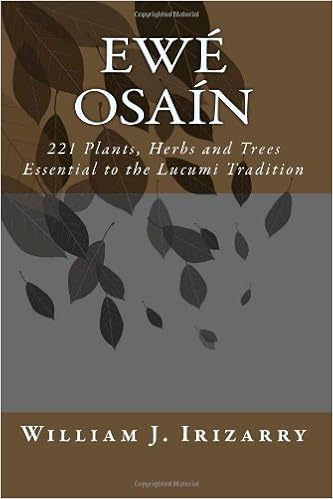
There are other considerations of plant philosophy such as the place it is growing such as a mountaintop versus a cemetary. Other ideas such as if you harvest it in the shade or sun side, what color the plant is white or black/purple. What the plant name sounds like, if the plant is bitter or sweet will determine if it is hot or cool, attractant or banishing, medicinal or poison. Plants are worked differently tradition to tradition, although there is some commonality. Plants have latin, lucumi, english, and spanish or creole nicknames for the same thing. Some of these plants are local and tropical and have no named scientific taxomy. We must get to know what is local to where we live, although some special plants must be shipped overnight for more important events and objects as tradition. This is one good reference material:


Ozain became an Orisha Osain after the Congo and Yoruban people continued to interact. He then came under the Nago nation as Ogun Osayen o Osayin as a Lwa in Vodou. Osain is very powerful, and has its own complete tradition that is similar to Palo. We cannot do much in these religions without plants, and as he controls the power of these plants as a forest (monte) spirit, is a great ally: a dangerous warrior and protector. There is the Mpungo Ngurunfinda, (finda/herbs) who is like a branch of Osain, and like our tree Lwa Gran Bwa, since palo is the spanish word for stick.

In Vodou, we have Gran Bwa (Grand or Big Wood), the Lwa of the biggest tree, usually near the center of the forest. He holds all wild plants. He also is associated with the mapou, called the Ceiba pentranda,  mapok, Iroko, silk cotton world tree. The saint used is St Jude or St Sebastion as he is Petro. An offering is usually given also at the natural entrance to a wild area of the forest or jungle to seek permission ( and listen to the response) and safe travel in their realm. Gran Bwa only takes water, leaves or vegetable food offerings. He is an initiatory (one of several) and permissive spirit.

Both Gran Bwa and Tobaku can be seen like our leaf faced "green man" Oak or Holly God as those have in Wicca.
Gran Bwa, the staff of Papa Legba, the cane and cross of the Baron, Loko and the poteau mitan or palo majeur pole in the Vodou temple are all related, on which Dhambala, or a pair of snakes are often painted. Spirits travel up and down this access point of the world. The royal palm tree is another common holy tree substitute and are both important plants, although different Lwa have their favorite tree. We usually tie 7 different colors on our tree and staffs as this same symbol of the creational snake Lwa (white/green and rainbow) and 7 chief Lwa of Sanse.


In our lineage, Tobaku (Tobacco: nicotania rustica) has become Lwa, because he is a sacred cemi spirit of the Taino indians, and a very important messanger totemic plant. His powers are healing, but disease when misused. For that reason only cigars or natural leaf are used and not cigarettes. His powers are purity, spirit communication and domination.We work with him in conjunction with the 4 winds, because the smoke and prayers rises up on our breath, and disperses our messages and creates community when shared. Tobacco contains compound which altar the mind, and our psychic perception of time and space for "shamanism". We use cigars for folk magic, divination, and to communicate with the dead in misa. Our breath in and out joins the spiritual and mundane realms. Many spirits like a cigar as an offering, such as Lwa or ancestors, and some female spirits as well or perhaps a cigarette.
Tobacco is a master and teaching spirit, such as many view cultural psychedelic entheogens of ayahuascha or certain mushrooms. These are very spiritual and not recreational, associated with the land, and snake spirits. Tobacco workers who are curandero, indigenous plant healers are called tabaqueros. Tobacco is used in Cuban traditions, Espiritismo and groups such as Maria Lionza in Venezuela is the most similar than the other ways used by Amerindians. There are many oracions or prayers to work with the spirit of Tobacco, most of them in spanish, or in booklets from botanicas. Working with tobacco can be a practice in itself in how you honor, ask permissive, offer, ritual observances and divine or work with it. I always advise people to start collecting a book of prayers that you like. In Haiti a natural healer is called a medicin fe, leaf "doctor". Whereas a worker more uses the aspects for "spells", but both may employ both methods and work spiritually.

Prayers taken from Sancista Luis blog sanseespiritismo, that I use often:
http://sansespiritismo.blogspot.com/2011/10/tobaccomancy-tobacomancia.html
PRAYERS TO THE SPIRIT OF TOBACCO


To the Spirits of the Four Winds, Black horse, white horse, red horse, and brown, you that find yourself in the four Corners of the Universe. Above and below and in the Four Directions. I call to you oh Charitable Spirit of Tobacco, ancient messengers of the Omnipresent One. I offer you in homage to the Guardian Spirits of (name(s). For wherever I go with this sacred smoke, you shall purify and cleanse. You shall remove any and every, seen and unseen negative vibration that surrounds (name/us.). And with the grace and power that the Holy Trinity has bestowed upon me, I (name.) purify and cleanse (name(s.). So be it, Amen.

PRAYER 2


With the permission of God.
With the guidance of the 21 Commissions of Spirits and the protection of my Guardian Angel.
With the watchful eyes of my Spirit Guides.
As above so below, and in the four directions, and to the Charitable Spirits of the Four Winds that come from the four corners of the universe. I ask for health, stability, and peace.
May the fluids of the Spirits that speak through the smoke of this sacred tobacco, be beneficial towards me and my cause. May all malice and deceit depart and scatter as the smoke does scatter, and only good and charity shall prevail. Amen.


If a plant was grown by humans, agricultural spirits like the Lwa Azaka or the Orisha Oko have domain. These are earthy spirits, originally most tribes were hunter gatherer before they settled and became agricultural. Azaka Mede is pictured as Saint Isadore.
One Mambo stated that each Lwa are given offerings before gathering their corresponding plants. In our lineage this can be done, but more often with Gran Bwa. Basil is another very important plant and is very common to be present at rituals. For Harvest and planting offerings and feast dates are acknowledged with services for Azaka and for the other Lwa such as the Mange Yam for good prosperity and fertility as well featuring the Nago nation and Simbi, Or such as Mange Lwa to feed the Lwa or Mange Mo to feed the dead and Ghede.

The natives knew much of their medicinal knowledge by the plant spirits teaching them. We have many healing spirits who are: Lwa, spirit guides of nuns or doctors, the indigenous folk healers and indios, as well as saints.They may work with closely several plants. Faith also is very important. They knew of medicinal value, but when not available, faith healing with any plant externally is possible in spiritualism.

When we get a plant from the store, the plant has not been spiritually harvested or grown. The plants are usually sold dried outside of Cuban botanicas when we should use fresh, for more plant spirit life force and vibrancy, more power. Some dried plants, the spirit is dead and gone. Sometimes we can activate some of its latent power, but fresh is always best. The plant is not the spirit, but the spirit is in the plant. Of course some are used dry such as cured tobacco leaf, or in making oils.

God gave these plants to humans as gifts, and their powers were given to these spirits as their gifts. One way we appeal to these plants and venerate is to, in our prayers ask for their power or specific qualities and recited abilities which God has bestowed upon them. We reward and further empower these plants by asking their light, elevation and spiritual progress of God for their work and kindness.

In this way, if we light the plant a candle and waterglass, We can sit with them in communication and understanding to make a relationship. This is how you get to know your plants, besides studying from a book. You have to know how to use plants safely, parts of certain plants can be ingested, or smoked in a session to gain a physical bodily understanding, and connect with their powers. They are used to prepare objects, as incense, anointing oils, washes and baths.

This was once understood more widely in Hoodoo and Conjure, that the plant is not just an ingredient, but an entity to be worked.

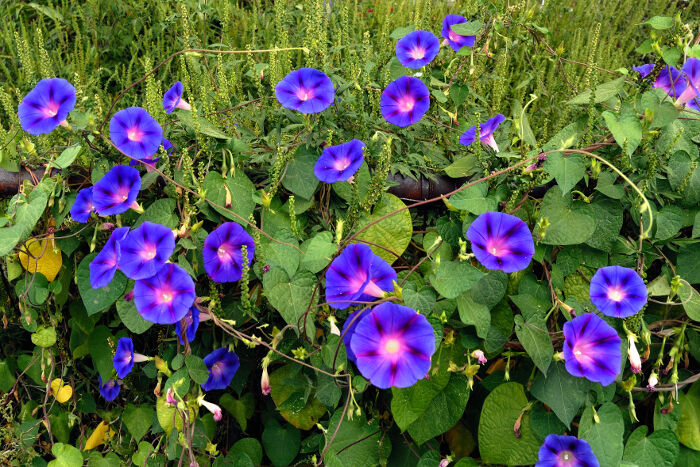
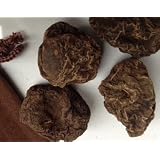
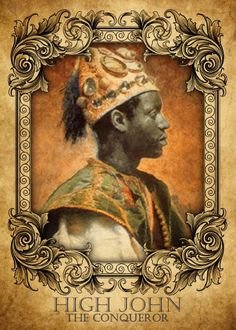
High John the conqueror was rumored to be the son of  a Congo king who was enslaved in the new world and jumped into the root of the morning glory flower plant. Some say he "returned or died" to Africa and left some power in the root. He was known for his intelligence and ways he outsmarted his slave master. Many people take no time to talk to and get to know High John. High John has recently lamented this to us. He is a sorceror and a magician, known for his Congo witchcraft or folk magic. He can do all things as a master root: luck, gambling, court case, love, money work, sexual prowess, success, protection and domination. A very generous spirit who loves to work. The root has larger male and female pieces and both can be put into a mojo bag like a pair of lodestones. In hoodoo and folk magic selected psalms are usually used with the work, depending on what your focus is. an oil using this root can be used on a novena candle, or fixed inside.
Fresh root is better, and should not be crumbling or dried out. Some dress the root with oil, or keep it with ginger slices to energize him and keep it fresh. You can learn more here. There is much to learn about rootwork in general, as an entire tradition.

Prayer to High John the Conqueror:

May Almighty Powerful God,
And the soul of John the Conqueror
Watch over and show me
the way to overcome obstacles, to conqueror fear and my enemies known and unknown.
Lend me your strength so that I can have success in my life,and achieve my goals. Amen

Garlic is another very important plant. Ajo or aho macho is the male garlic, the little round bulbs you usually see at a mexican store, and not the grocery. All garlic has similar properties of fire, cleansing, protection and exorcism, but the male has added masculine virility and warrior properties. The husks can be burned as a smudge. Garlic is high in sulfur and ammonia, known for purification, and against energy vampires or the evil eye. Many cultures hung decorative garlic braids and such as the Italians chili peppers as protections.
                                             el diaro, male garlic

Novena prayer to Miraculous Garlic:

You who were placed on Mount Calvary where Jesus died to give eternal light and to free us from evil; free me from jail and from all demons. When my enemies plot to kill or hurt me, let not their eyes see me nor their feet reach me. Don't let their hands touch me, their guns shoot me or their knives hurt me. Let no harm come my way.
Miraculous Garlic of goodness, separate me from the enemy. Remove all envy and jealousy. Help me in my work and in all my affairs. Grant me the love of those around me. So shall it be, and so it is. Amen 

                                                                       XSancista7X


Saturday, December 10, 2016

Magical concept: sweet & bitter, herbs and spiritual baths

You might want to read my basic blogpost of notes on spiritual baths first

Sweet or Dulce is attracting of the good things that are desired in life and generally blessing.

Bitter, Amarga or Amine is cleansing and removes the negative energy that can block new good things in our life such as a job, romance or healing, and thus a bitter bath, is usually done for a consecutive number of days usually 3 or 7, followed by the drawing in or sweet for the same number of odd days.

Also in cleansing baths is sour ingredients such as vinegar or acids such as coffee and limes or lemons. Bitter herbs are usually naturally high in sulfur and ammonia.

What is bitter is often called strong, "forte" or hot but not always. For example cinnamon is hot and sweet, perfect for love and money work. The heat adds force and quickness. What is sweet also can be cleansing by exceptions, but in general condition or drawing baths are not for cleansing. As you can see almost all flowers are sweet, so perfumes like Florida water while mildly cleansing or more accurately refreshing and used for the alcohol content, is also an attractant to spirits (2 handed) such as with the dead and ylang ylang or Kanaga water, as the sensitive part of the plant, so you must be clear with your intent on using it. Florida water and other alcohol based waters can be added to the bitter as an exception. I am talking about not mixing bitter and sweet leaf in general.

A bitter bath is no rival to cleansing. Usually 7 bitter leafs are used, the number of the forest and celestial, but for more important preparations sometimes 21 are used.
With sweet herbs an odd number like 3, 7 or 5 as the number of the sweet waters of the river. You could just as easily mash up sweet fruits and use this. My apprentice for a time would do dry candy cleanses, wrapped candy passed over the body and then thrown in the trash. We are working with our spirits either emissarios or misterios associated with those areas along with the power in the plant, and our own energy.

An odd number of ingredients and often of sacred significance is used. Ocean water and salt are considered bitter. There is a whole philosophy on bitter water such as of the transatlantic slave trade, diasporic removal from the african homeland and tears. The ocean is a life source as well as a watery grave. It still can be used for finance work, as in trade and ships coming in, and associations with spirits such as Agwe and the riches of the sea. Some consider material such as bluing or minerals of salt, sulphur, and dirt inert and neither bitter nor sweet in themself.

Because bitter is hot and removing, we for the most part do these baths neck down only to not heat up the head, and create hot tempered imbalances, nor embitter the area and disposition for spirits that are beneficial to us, more importantly if you have been crowned with your spirit guides and higher spirits, but also the claimed ancestors. Likewise I personally will avoid salt unless there is a big problem, because our good dead do not like it, as it leaches their energy to the earth until they are of enough elevation or progress spiritually.

There are many technical concepts when it comes to bath preparation. For example in general we do not mix sweet with bitter, flower or fruit with leaf. Root and leaf is generally ok.
There are exceptions to these rules but are general guidelines. Each plant has a sentient spirit that lives in it that can be prayed to and honored. Remember to give an offering and wild harvest responsibly the plants you take. We almost always use fresh herbs for the vibrancy and potency of energy, but the bath can have white rum or alcohol, bay rum, added to preserve a larger amount for a short time kept in the fridge or for hand passes like Florida water.

Alot of people do use dried bay, rue and hyssop though.

There is the disposal of the bitter leaf material away from the house with a payment say of 3 coins to the crossroad, each place having a significance to spirit, energy and number associated. The sweet bath remains usually are kept around the house, such as a floor wash. The bitter wash can also be used to clean the house and spiritual tools.

Certain leaves which are more tropical, in spanish are named to their function such as quita maledicion is bitter to stop evil, same as espante muerte: chasing the dead. leaves and sticks/palo with the name rompe means break negativity, lies and spells on you. We are taught not to put espante muerte on the head nor abre camino due to opening up of this area in which spirits have been placed.

We do not boil the fresh leafs but we mash it with our hands and sing and use prayer into the warm water and speak our intention. We may leave it next to certain shrines or altars with a novena candle inside.

The most important herbs in Sanse are probably
Tobacco: messanger Lwa and Taino cemi spirit
Major plant spirits hold leaves such as Loases Gran Bwa, the biggest tree of the forest and Ogu Osain.

Whereas some cultivated herbs would also fall under the agricultural Lwa Azaka, yet both also relate to the land and certain natural areas.
Rompe Saraguay (spell breaker and removes negative dead), bitter along with garden sage and rue
Basil can be cleansing but also blessing and very important, it is also a major exception and can be mixed with bitter such as rue and sage.
Ceiba tree, the silk cotton Mapou: our holy magic and world tree, bitter and blessing
Abre Camino to open paths, bitter
Copal as sacred to the Taino people and the dead, 
as well as Anamu bitter congo weed root a very useful medicine for many ailments such as arthritis and cancer. Anamu is taboo in some Ocha houses due to being poisonous to children of Obatala and toxic to children of Yemaya. It is one of the ingredients in our Taino Indio drink we infuse in alcohol.


Spirit-Blossom Ceiba Tree by Lisa Dunbar Solas

Below is a simple list that most people can find around that do not live in the tropics, which is much more extensive if you need to prepare certain objects and during initiations. Otherwise, there is not as much need to order from tropical botanicas, and you can use what is in your area following certain principles. There are certain plants that have to be used in those cases. Always follow your tradition and godparents guidelines. What is used in Palo is different than Lucumi. One list I saw had abre camino, avocado leaf, rosemary, altamisa and sage listed as sweet, I consider those all bitter personally. Another had mint as bitter and I consider that sweet. Of course there is alot to study about plants, medicinal use, safety and for magical use beyond these concepts.


SWEET LEAFS

Mints
Mejoram
Bee balm or Bergamot
Stevia
Parsley
Angelica
Lemon balm or verbena
Lettuce and watercress (but not dark leafy bitter greens)
Vervain
SWEET FRAGRANT FLOWERS OR ALL SWEET FRUIT
marigold, carnation, lily, lavender, chamomile, violet, rose, orange, jasmine perfumes etc attract 
mangos, oranges, apples, bananas, melon, tropical fruits: pineapple, papaya, guava


SWEET SPICES

Anise
Cinnamon
Sasparilla
Honey, molasses, cane sugar etc
Goat milk, coconut milk, almond milk, dairy milk, rice milk or water


BITTER

plantain (not the vegetable, the ground leaf next to drainage areas or grass in wetter northern climates)
white sauco elderflower/berry leaf
fennnel
purslane
black tea leaf
tobacco
fern
rue
dandelion leaf
epasote or epazote mexican cooking herb
sage: usually fresh garden or cooking sage
artemisa: wormwood, mugwort, motherwort etc
white morning glory leaf, datura leaves, but also purple bell flower leafs: morado
Laurel bay
nettle
corn leaf husk
eucalptus
spanish broom
horseradish leaf (not traditional but found it works)
vencedor: lilac tree leaf wins battles, triumphs
most tree leaf
thistles: milk thistle, blessed thistle
garlic bulb root, onion, tumeric root
BITTER FRUIT
limes, lemons, bitter melon gourd, coffee

I am going to write more on a major magic concept of hot and cool
But as I have been writing on spiritual baths of late, 
my next entry will be for the 2 Christmas and New Years Baths of Bain Noel and good luck Bon chance. This will be so those that want to make them can for Dec 24-26 or January 6th or 8th

I have a bunch of blog entries planned, such as for elevation after death, because I have alot of requests plus, it is that time of year for those to or who have travelled to the otherside of the veil. Contact me if you would like me to cover a topic you have not seen so far.

-Sancista 7 crossroads XXXXXXX


Friday, August 5, 2016

Just judge & the 7 african powers

 Alot of people think the 7 african powers are the Orisha but they are not. The confusion came from the saint image of Jesus crucified with an array of saints around him. It did not come from the yoruba faiths that work with the Orisha neither, it came from puertorican espiritismo. People saw these products in the botanica and decided to use them without cultural context, and bad information was spread. You will also see the statues used as 7 madamas or 7 congos as a group of guides, sort of like a package of spirits. The original image likely came from someone in espiritismo to honor their own 7 african guides.

The Orisha religions do not have this concept of the 7 african powers of being "the most important" or prevalent Orisha at all out of a pantheon of hundreds, of some who will be more personally concerned with you than others. The Orisha are all received in ritual and pots anyways, or are in your court and not to be used as a group or pick and choose either. The beginning rituals in Ocha, usually is to receive the 4 guerreros or warriors for your own personal growth and care: Elegguá, Ogún, Ochossi and Osun. This does not make you an initiate until you make kariocha with your personal Orisha.

The 7 african powers are spirit guides, dead elevated humans, just like the madamas, or la madama, not everyone has one of these commissions in their spiritual court or cuadro that makes up your spiritual frame.
Therefore there is no reason to be petitioning them or honoring them without this knowledge, as it will weaken your spiritual connection with the guides you actually do have. Despite people making products and writing books that are not in these traditions since the 1980's.

They represent different african tribes, of dead, that one may have, and one will usually take the lead and come through a reading in Ocha or a misa (seance) in espiritismo. No one person will have the same guide that comes through this category. Dr E, a spiritualist, santero and hoodoo doctor identified them as coming from Yoruba, Congo, Takua, Kissi, Calabari, Arara, and Mandika tribes. Within the diloggun oracle’s corpus of information, the Seven African Powers are heavily referenced in the odu Edigbere (7-8). Interestingly, this odu also speaks about the importance of the drum as a tool to call down the Orishas and it also speaks about the power of Congolese magic within the religion of Palo. (however beyond that one cannot comment on Palo or ones spirits within that religion unless being a priest of Palo, but the dead are the dead). It speaks of working with the dead in context of being around the person, which santerismo, palo and espiritismo would be a path open to them being associated with strong dead.
If a person were to receive the odu 7-8, it would indicate that they have the Seven African Powers in their court of spirit guides and it would be up to them to seek an Espiritista to determine who they are, what their names are. 
Copied from http://santeriachurch.org/the-seven-african-powers/

I do disagree when he says anyone can approach them because we all have dead. Yes we all have dead, but it is appropriate within these traditions and for safety to go to misa, and work with your dead you actually have first. Its not to say you will have these at all, so its pointless. Can you call forth a dead from each tribe? I suppose, at your own risk with varying results. Would this then be guides as used in the originating culture, or the 7 african powers, no. It would just be working with the dead. And they are usually not ancestors, and guides are mostly contracted and present since birth. The best thing would be to enquire before a misa, or get a investigation or reading.
Elekes or Orisha necklaces hanging in a botanica, for the priests of Ocha to sacrifice and prepare over with specific leaves. Note on the second left: 7 potencias or powers. Many in Ocha also practice espiritismo and if they do both may call it Santerismo, especially in New York. In Sanse we do not do animal sacrifice, but may rarely participate in the need to have it. Our necklaces are prepared differently. In the Maria Lionza sect in Venezuela, they use 3 different races in figures of the Indio, African and Eurasian to represent the hereditary and ancestral cultures and of mankind as the 3 powers or potencias, a spiritist tradition, also of the dead. In Sanse you may also see this used, even though they are specific spirits, to represent the 3 groups.

The 7 african tribes are usually worked with a 7 color candle, and a 7 different color striped or patched cloth. For us in Sanse and puertorican espiritismo, 7 is the number of the higher spirits such as Lwa, enlightenment, the auric field light spectrum, and the celestial energies of planets. In my tradition we do not use the 7 bead pattern of 7 colors necklace. We do use a multicolored necklace from the more congo lineage, as we have palo pracitioners in our house. The multicolor also represent all your personal dead including ancestors, necessary spirits of the dead and guides, not just if you have these 7 african powers in our house. This would be called the egun and the egungun associated with the multicolor dress outfit in the yoruban faiths. This is why Oya the Orisha of the cemetary gate is associated with the multicolor skirt, the colors of the wind and dead, besides her brown-red-purple burgundy and the multicolor stripe skirt of the Palera. 9 is moreso associated with the dead and her number. And we use 9 color bandanas on our white table to the dead, 7 on the divisional table to the Lwa. I have seen one lineage use the 7 color 7 bead necklace sequence for the misterios or Jefe Lwa that a emmisario or messanger dead of the Lwa, but we personally do not do this, and have our own way of making a bead necklace for a misterio, but this is not traditional, nor receiving an eleke as they do with Orisha. In Haiti some hounfort do have necklaces which belong to the temple with a specific number of beads to represent all the misterio for the Mambo or Houngan, or made for a Hounsi if it is known the misterio they are under.
                                                       Oya –by Susan Matthews
Egun dancing masks, Benin, by Susan Carlslund

The just judge image is used for folk magic such as hoodoo in justice or court case work, usually in a multiple odd number of novena candles. The just judge is Jesus in the protestant tradition, or Yaweh as they are not polytheist as the judge of mankind, or at least the judaic followers. But it is also a mystic glyph of the sun who is the roman glyph of sol invictus, invincible (winning), and of the bay laurel crown (corona from the sun) of success and victory. Jesus's death signified victory over death as soul everlasting, as well as the justice of a new deal over old testament and Mosiac law. As lady justice has been blinded, many turn to court case work to get a fair trial, for forgiveness, against enemies (as the old guard god of vengence), protection from enemies, or a positive legal outcome. Psalm 94 is sometimes used.

This image and story contains many secrets held within the magical qaballah and hermeticism, and of the numbers, 7, 8 and the dead and solar mysteries.


Of course there are many different Jesus images, as there are fewer than the assorted Mary's used to represent the higher misterios of the Lwa and Orisha. The crucified Jesus may be use to represent Ogun of war and blacksmith god of making the nails and sacrifice, justice and progress,or Olofi incarnated god, the thorn crowned as power of god as mars, the one of good hope or esperanza as Torolisa the bull Lwa, and the sacred heart as Gran Solier sun Lwa.

The 7 saints usually picture around this is:
  • Saint John the Baptist.
  • Virgin of Regla.
  • Saint John the Baptist.
  • Saint Martin of Porres.
  • Saint Joseph of Arimathea
  • Jesus Christ on the Cross.
  • Lady of Mercy.
  • Saint Barbara.
  • Lady of Charity of Cobre
  •  The saints are not the Orisha, Lwa, nor the dead guides in question, and saints are used as such in a religious or catholic folk witchcraft, or modern hoodoo sense. As the saints were also not originally in hoodoo, added in since the 1970's. Just Judge, Jesus was used in the protestant sect.
There are many prayers you can use for the just judge. This prayer is from the book:
 New Revised Helping Yourself With Selected Prayers:

Oh Just and Holy Judge, Blessed Son of the Virgin Mary, let my body be calm and my blood be washed so that wherever I may go, the hands of my Lord Jesus Christ be in front of me. That of St. Andrew before and after me. St. Peter's in the back and the middle. Those of the Virgin Mary, that my enemies may come and go with eyes but without seeing me, with arms but without hurting me, and that justice may not apprehend me. That my body be covered with the cloth that covered Jesus Christ's body, that I may not be hurt, or dead, or incarcerated. Oh Virgin Mary, this prayer I say for good or evil that my enemies hold against me. If any sentence be in this day against me, let it be revoked by the blessings of the Father, the Son, and the Holy Ghost. Amen

During spiritualist misas, just judge prayers and chantry or mass for the souls of the dead are done to the just judge and especially around the day of the dead, after funerals for their benefit, and souls in purgatory.

 I hope that this clears up the issue and should not discourage you, but encourage you to find out who your spirit guides are, inform your practice, and further your learning. Use this information to evaluate correct resources and teachers, who should actually be in the tradition you are learning about.

Sancista +++++++


Saturday, March 19, 2016

Hoodoo, folk magick and Voodoo differences

Hoodoo is a system of largely protestant based rootwork or plant work, combined with biblical passages such as the psalms. Some do work with the dead in terms of animal bones, and different dirts including grave dirt. There is believed to be spirits within the plants, and are the main spirits worked with outside of Christianity. There are allegorical teaching stories used such as briar rabbit and trickster spirits from the native american, african mix saw the similarities with their spider Anansi. Being protestant, there were no saints to preserve african spirits as well of the Orisha, Mpungo or Lwa, and the slave masters were less understanding of idolatry.

To facilitate this practice graveyard work including mediumship with the dead is employed, but it cannot be readily identified as necromancy. In modern times (the last 45 years) many who practice folk magic have joined the afro spiritualist or spiritualist churches which some are more Catholic based. Not all hoodoo or root workers are in the spiritualist church. This lead to the inclusion of spirit guides such as Blackhawk, 7 african powers and la madama from endless commissions of spirits incorrectly without reference, as practices and knowledge around these spirits were not passed on from the cubans and puertoricans from which they originated, known as espiritismo or the spiritualist church outside of the more european kardecian based.

 Many people want to use the items in a botanica, but they have no power sitting on a shelf. The 7 african powers are not Orisha, they are various dead warriors from different african tribes from puertorican espiritismo and not the Cuban religions. This was further confused with the image of the crucified jesus as the just judge, Ogun or Olofi. Many different images of the Jesus and Mary are used for various african spirits where there was Catholicism. The Cubans do not use saint images for their religious item for the spirits, it is just decoration. They receive the spirits in a pot in ritual. From what I have read about New Orleans, the catholic italians and irish kept to themself, although the pomp certainly was appreciated by the rest of the population, and welcome during open house feast dates of the saints.

There is some speculation at this time how someone from an American east coast european spiritualist church could found a southern afro church without having any public information about lineage, because they did not have our spiritual pots and teachings. It is possible that a congo based practictioner helped create this as Chicago is not far from New York where there is espiritismo. In which case Blackhawk no longer was a spirit guide and became more like a spirit of the dead in an nganga or nkisi which can be birthed from to another who already has it. Unless this pot was created because his spirit guide statue was unable to be prepared in the afro spiritualist way. We also have indian pots, if a person has several indian spirits or ancestry as do those in Dominican Voudou called a Tindjo as a portal, and this could have been appropriated or influenced this creation.

I have contacted a hoodoo author about this question politely with no response, who supposedly held the lineage of Blackhawk into introducing it into Hoodoo. Quickly glancing at one of her books online, she had a section on how to work with the spirit of la madama, which shows the lack of cultural connection, as she is thousands of different individual people who is a spirit guide to an individual, of which not everyone has one in this category, nor have the same indian guide. Hoodoo workers going out and buying a la madama statue is rediculous.

 In more European spiritualist churches good spirits have to acknowledge Jesus. These spirit guides are concerned with one person only. People may be attracted to the image of a specific historical indian perhaps because they have a spirit guide, no two will be alike however, and cannot be willingly passed to another person, or in life. Many people like the image of La Madama, but she is hundreds or tens of thousands of different dead people in that class, all with different real names. A person may have a Congo or an Africana, as black dolls are not all the same person, class or culture. Spirit guides come from seances, in which advanced mediums in community identify your spirit court or entourage, and no two people will have the same dead muerto or spirits. This is not something a person can do themself outside the traditions of spiritualism. People even have confused the Lwa statue of the african man Candelo as a folk saint, or these spirit guides as folk saints.

Hoodoo is folk magic that does not use african spirits, or pagan spirits, however in modern times the usage of Catholic saints has been added, again by going to botanicas and imitating african religions such as Santeria. Santeria is really magic with the saints, but came to also incorrectly be the term for the Orisha religions of Ocha, Lucumi and Ifa.

What most people think is New Orleans Voudou is in most cases actually folk magick, heavily congo based, incorrectly attributed by white ethnographers whose missionaries treked heavily into west africa and identified anything remotely african as Voodoo. Modern pracitioners in the area are mostly Haitian initiates, and the records do not identify Lwa as being ever mentioned or prevalent in this area. The slaves in the area were mostly Senegalese and Congo, and can be reflected in the usage of red and black for some Rada, the inclusion of european poppets with "nails" not understanding the congo nkisi, and they were not used of curses. Nails are used for differing reasons, but share the marking of intention. THERE IS NO SUCH THING AS A VOUDOU CURSE. It is outside the religion to do so.


Really voudou dolls do not exist. These things are not seen in any other branch of Vodou for the most part or have very different uses and meanings. Dolls are used throughout the Caribbean to represent an ancestor, a guide or spirit they love. In other african diasporic religions such as palo they may make a doll for a client to work in absentee, such as protection to keep in a temple, much like a pot de tete in voudou, items are made with personal hair clipping or nails etc is included as just one of the ingredients required.

 Also the emphasis on the color white is in voudou for rada Lwa, with red and black used only for petro. Black is rarely used otherwise, except for a few Ghede or Ayizan along with other colors or white throughout Voudou diaspora in the Caribbean. In Sanse we use purple and white for our chief Ghede Limbo, and black and white for the Ghede family. I do not think people understand the use of color, why they are used, its not just, those are their colors. Red and purple are considered hot, black and white are cool, with black being lower and darker. Black and purple is more so with riling up the dead to send them out, hot and dark, such as with bokor tradition outside of Voudou. Some Haitian hounfort are two handed. We try to make the influence of the dead more kindly yet active with the "choice" lineage of color. There is no preservation of Ifa with the Orisha either, or the inclusion of Ellegua. The Orisha mostly exist in a form of Ogun, and not many female Orisha survived in Vodou. If they do they are 1-3 from a family passed down. Red and black is also more congo with their crossroads Lucero spirit, or within congo based Quimbanda with their Exu and Pomba gira crossroad spirits. Unfortuenately people mess with what they do not understand and is beyond their egoic control, or knowledge level.

Unscrupulous uninitiated authors have tried to make an afro wicca out of new orleans "Voodoo", as there should be no pagan Greek or European spirits, they should not use spirit guides like espiritismo, and they should not have a whole pantheon of Orisha to choose from or Ellegua, and does not include western magick of hermetisicm. Most of any remaining west african practices have likely gone underground due to the tourists, or are practiced by Haitian lineage. Meaning they are Haitian immigrants who recently brought their religion, or Americans who went to Haiti as is required, not new orleans Voodoo. Any native new orleans Voodoo within the confines of one city that possibly existed largely left or went underground within Louisiana.

There was seldom any Caribbean to America transport of slaves by prohibition law. And there is no other indigenous Voudou or African religion diaspora origins in America. It has become a tourist collection of museums, gift shops, tours, and books to make $$$$$$$$$$$$$$$$. Just because there are cultural mixes in tradition doesn't mean people can just grab anything, and say "well they did it, they mixed things". Who's "they": the slaves who were forced to, and hundred to thousands of year old traditions these tens to hundreds of thousands of people agreed upon. They died over t preserve their tradition the best they could and made informed choices to changes or substitutions based on cosmology or philosophy.

Madam Marie Laveau was a Catholic, relatively middle to upperclass free buisnesswoman, of mixed ancestry, possibly part Haitian, said to be American born in some accounts. Written suppositions are often more fiction than fact at an apprasial of the wikipedia page. She possibly married a 3/4 white Haitian man who shortly left, and then she studied under a Senegalese man Dr John, a hoodoo worker. Her chewing peppers for justice in one story, crying with red eyes reflects the congo as in petro. And then there is congo square, where she was seen dancing with her snake possibly named Zombi, performance art or no, Nsambi was the congo god. Yes we have the snake dhamballah, but the congo makaya tribe is where we get the Simbi Lwa. The mojo or gris gris bags came from a Senegalese or wolof word. The original bag was red flannel, and only used or had access to white or yellowish tallow candles for the most part.

There is a system in which any venerated dead of any religion or people can become Lwa however, but would be within a religious framework of Voudou. There is also a seperate ancestral veneration by their own family or cultural group or tribe. Did Marie Laveau practice voudou?, its very doubtful. But if the stories of her nursing epidemic victims is true, she definately deserves veneration, and as a folk magick practitioner and diviner.

 The disgraced author Tallant is generally regarded as grandiose fiction, who again called all african folk magick and cursing voodoo, even Zora Neale Hurston was doubtful about the existance of a public or widespread voudou lineage as an ethnographer. She stated on her visit (sic), "the african rites, with names that rivaled those in Haiti", but they were not similar, nor recorded. My guess is they used the congo name for god, Nsambi. In our spiritual house, we hold secrets, all I can say is that Marie Laveau is venerated, and a congo spiritual worker through Palo Mayombe. JFK was made into a voudou Lwa by some Haitians. A bishop? who harried the folk practitioners in New Orleans was supposedly made into a Lwa, who hated any spiritual expression other than than Christianity. Both were not practitioners of voudou in their life as far as is known. Can a spirit guide become a Lwa? Yes by a legitimate voudou practitioner with legitimate reason such as connection, as we do not work with a whole pantheon. Scholars are now beginning to write about the difference in african tribes and their influences in the new world, previously inaccurate reports from largely white missionaries is what shapes most and outsiders viewpoints on this subject to this day.

Obeah from Jamaica has practitioners also in a tradition of spiritualism, pocomania or revivialism. Obeah is heavily folk magick based, and ceremonial magic based using the 4th and 5th books of Moses. Folk magick, ceremonial magic and sorcery is evident within the Bokor, secret societies, black lodges of Haiti, and is not considered religion nor Voudou, even if used for healing. They do use Lwa more so the congo based Petro, Baron Samedi and Kalfu (carrefour, four square).

Some people identify Hoodoo, conjure and appalachian magic as the same, but they have regional differences. As explained to me by my apprentice, Appalachia has more scottish roots, Granny or Hexen has more dutch germanic roots with hex signs etc that mixed with natives to use pow wow healing methods, and hoodoo is more african based. Conjure can be xonidered more spirit based. Although each region included european, native american and african practices, they settled into slightly different traditions and had different local plants.

These were family traditions, mostly practiced in solitary, or passed down one on one orally. Thus it is very difficult to learn accurate practices from books or the internet.

The spiritualist churches as in the african based espiritismo has baptisms, and some hoodoo practitioners say they have baptisms outside the catholic church. Hoodoo is not a religion however, and many have no such practice. This lave tet is also done in Vodou which is an initiatory religion and uses the Lwa, of which only a few concern the practitioner and not a whole pantheon. The Orisha people only possibly had one or two out of hundreds in Voudou passed down by family lineage and not generally within the religion. In New Orleans some Voudou houses say they have no clergy nor initiations which mark religion.

 Many people want to work with african spirits uninitiated, but this does not exist outside of lineage, whether family or orthodox. These african diasporic religions do not contain a bunch of spells, as the magic is inseperable from the religion's services, practices, spiritual point of access passed to you in intiation or blood lineage and rites. Voudou is life, largely in the moment and experiential in congress with spirits. The spirits come in physical mediumship and interact with the community, that is Vodou.

Many seek to keep the people of the culture and these spirits at an arms length with over intellectual approach, such as through a books, but this is impossible as a way to practice. You can study the culture, but not the religious experience this way. A Haitian American said, "voudou pas des livres". I agree voudou is 98% without books, leaving room for creativity and cultural study once you know the spirits you are supposed to be working with through your initatory rites and services.

People from Louisiana, shameless profiteer authors or newagers can get as mad as they like about what I have said. The unitiated authors neglect to address these issues I have raised, nor have the lineages to back it up, nor allow disagreeing viewpoints on their pages. In Africa there were royal priest kings, and there is no guarentee of this connection now, outside of unbroken family lines and religion. There is nothing wrong with hoodoo, it is awesome folk magic, but its not Vodou religion either.